Justice does not entail solely courts or the legal process. It embodies the concepts of respect, equality, and the provision of rights to every individual, including children, women, and the marginalized. In the Arab world, the lack of proper legal means, along with social and economic disparities, often stops the population from getting fair treatment in the legal system. One of the organizations that tries to change this situation is the Renaissance Strategic Center (RSC), which is part of the Arab Renaissance for Democracy and Development (ARDD), by advocating for justice systems that are together with the people, that are accountable, and that cater to the needs of the local communities.
ARDD has made Access to Justice a primary program and has been delivering and supporting legal aid services in Jordan, including in the refugee camps, since the program’s inception in 2008, simultaneously working with national partners to improve the justice system. The program is based on the six guiding principles: justiciability, accessibility, availability, quality, meaningful remedies, and accountability. It engages in a three-fold strategy: monitoring the legislation and the processes related to the courts, lobbying for reforms based on solid evidence, and building up the engagement of the community at local, national, regional, and even international levels.
Child-Friendly Justice: Safeguarding the Most Vulnerable
In traditional justice systems, children are especially vulnerable due to various circumstances such as poverty, displacement, or social exclusion. RSC / ARDD, acknowledging this issue, takes a step further by establishing child-friendly justice initiatives that are aimed at protecting, empowering, and giving legal recourse to children in need.
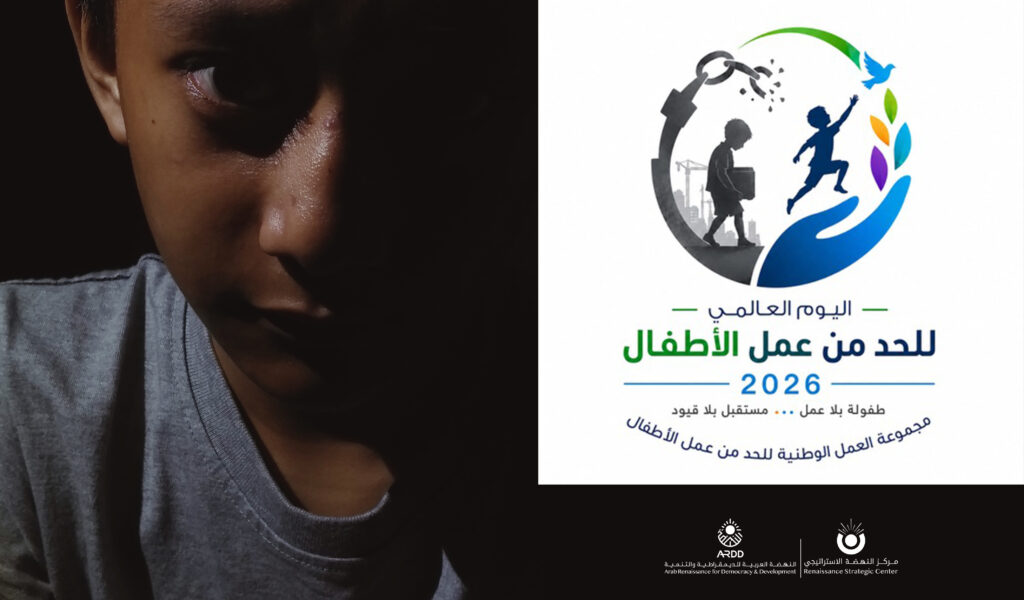
One of the activities that stands out is ARDD’s presence at the field visit to the Center for the Care and Rehabilitation of Female Beggars in Al-Dhulail, which was an amazing experience. The visit that was organized together with the Ministry of Social Development, Plan International, and the National Council for Family Affairs marked a very special occasion as it coincided with Universal Children’s Day and the World Day for the Prevention of Child Abuse. ARDD, which lawyer Mousa Al-Zyoud represented, did an evaluation of the services provided to children, looked into legislative developments, and talked about national action plans in the area of child labor and begging prevention.
The visit brought into the spotlight several key accomplishments, among them the Juvenile Protection Regulation No. 36 of 2024, which is in harmony with the Juvenile Law No. 32 of 2014, and the formation of a National Coordinating Committee for managing child labor cases. These policies are the indicators of a national commitment to child protection getting stronger, with ARDD at the forefront of bringing together the government and the NGOs to work as one.
The RSC/ARDD programs are not limited to laws and legislation. The future Investing project with Vision Hope International e.V. partnership is one of the initiatives that include technology in education, make students more active in the learning process, and cut down the number of dropouts in schools. The Student Support (Ma‘ounat Taleb) program helps with essential educational resources such as schoolbags, tablets, and stationery. Monthly visits to youth detention facilities are done to ensure the children receive legal awareness sessions and the staff get capacity-building support. Through all these efforts, RSC is making sure that children see justice as a protective, empowering structure rather than a punitive system.
Justice Sector Reform: Bridging Policy and Practice
Justice system reform brings about a multitude of changes in various aspects – it needs to be reformed through legal books, and it must be made really accessible to the public through trust-building measures and the implementation of inclusive policies. RSC/ARDD has never been reluctant to push for the Justice Sector Reform; they have always helped the community in gaining access to their rights and services by dealing with the issues that obstruct the way.
The Justice Forum in Jordan, which was co-established by ARDD in 2017, has opened up a space for the discussion of reforms in laws and institutions among experts, practitioners, and policymakers. RSC does not just sit silently but rather plays the role of an active facilitator through dialogue and sharing of evidence-based research, thus enabling the creation of policies that are both informed by local hardships and international standards.
The RSC’s guidance has directed the reforms in the justice sector towards several goals: making court proceedings transparent, developing judges’ and lawyers’ professional skills, encouraging the use of alternative dispute resolution methods, and making it easier for disadvantaged groups to access the legal system. The changes in the legal system acknowledge that the right to justice is a public effort that needs the cooperation of government and the support of civil society and communities at the local level.
RSC’s Role: From Research to Real-World Impact
What distinguishes RSC is its holistic approach. Beyond legal aid, it combines research, advocacy, and field engagement to address systemic challenges. Its initiatives are anchored in human dignity, inclusion, and local ownership, ensuring that reforms are practical and sustainable.
For instance, RSC’s monitoring of legislation informs policy recommendations that reflect the lived experiences of children, women, and vulnerable communities. Simultaneously, field interventions translate these recommendations into concrete action: legal consultations, mediation, capacity building, and educational support. This dual focus ensures that justice is not only a concept but a tangible reality for communities across Jordan and the Arab region.
Supporting Justice and Human Rights
Government officials, benefactors, non-governmental organizations, and the public all contribute to maintaining actions that guarantee access to justice. Working together with RSC/ARDD, raising public awareness, or establishing partnerships are among the ways to support child protection, women’s empowerment, and justice system reform.
In the Middle East, justice is not just a concept but a practical principle that comes when people are strong enough to demand their rights, and the government is responsible to the people. RSC’s work is making access to justice a reality for the most needy who need the most.