By Abigail Harper, Intern at RSC
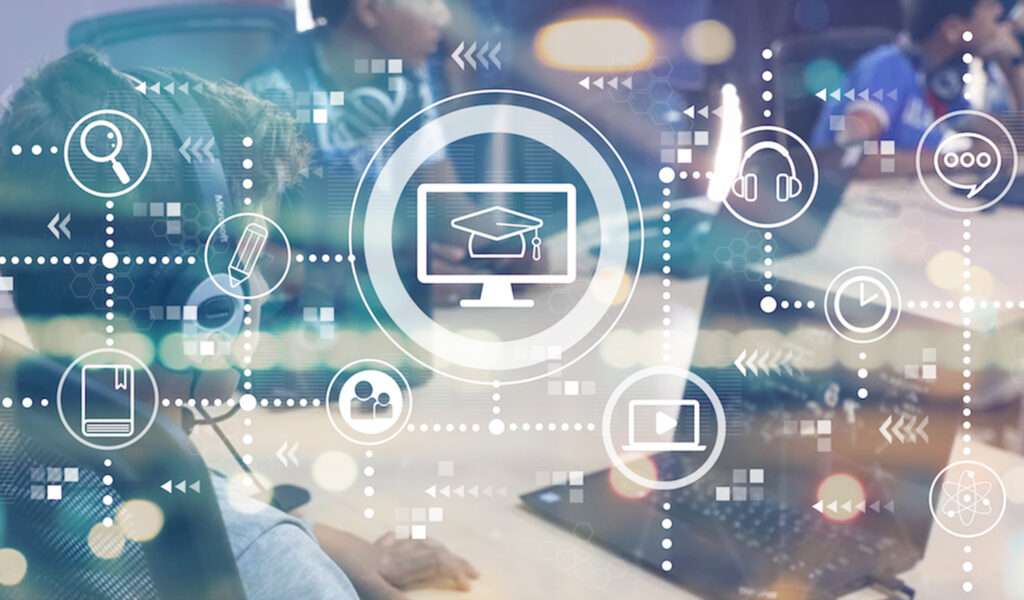
The theme for this year’s International Day of Education, celebrated annually on 24 January, is “The Power of Youth in Co-creating Education.” As the global community strives to achieve UN Sustainable Development Goal 4 – to “ensure inclusive and equitable quality education and promote lifelong learning opportunities for all” – young people under 30 now make up more than half of the world’s population. As the main beneficiaries of education systems and the majority of the global population, young people must be meaningfully involved in shaping the future of education. This is especially key at a time when global systems and technology evolve at an ever-increasing rate. The theme of last year’s International Day of Education was “Artificial Intelligence and Education: Human Agency in an Automated World.” A year on, the international community continues to witness rapid technological change, raising urgent questions about the purpose, accessibility, and quality of teaching and learning. AI and other emerging technologies offer unmissable opportunities to strengthen education systems. However, they must be introduced thoughtfully, with strong safeguards and clear regulations, to ensure they support learning rather than undermine it.
In Jordan, recent investments in education signal growing momentum towards digital transformation. The Jordanian Digital Transformation Strategy and Implementation Plan 2026–2028 outlines the government’s plans to enhance education programmes to equip future generations with the skills needed to excel in the digital age. At the same time, Jordan’s education system continues to face significant challenges. These include high dropout rates linked to socioeconomic pressures, outdated teaching methodologies, and limited infrastructure. Rapid urban growth and the influx of a large refugee population have placed additional strain on already stretched resources. These challenges disproportionately affect girls and displaced children, who often face further barriers such as early marriage, violence, and insecurity. When used responsibly, AI could help ease some of these pressures.
In December 2025, Arab Renaissance for Democracy and Development (ARDD) launched “Investing in the Future: Building Sustainable, AI-Enabled Learning Systems in the Jordanian Education Sector.” Built on a comprehensive feasibility study conducted with students, teachers, parents, and the Ministry of Education, the initiative aims to support sustainable, inclusive, and context-responsive AI integration within Jordan’s education system. Zainab Alkhalil, ARDD’s program manager, asserts that “Investing in AI-enabled education is, at its core, an investment in people. When young women and men are empowered to engage critically with technology, they become active co-creators of inclusive, equitable, and future-ready education systems.”
Beyond AI-specific initiatives, ARDD continues to invest in youth-led, inclusive education programmes. These projects encourage young people to build up their skill set, equipping them to enter an increasing complex digital labour market.
The “Nidaa for Change” Initiative was launched in December 2025 to promote inclusive education for young women. The project aims to support an inclusive, equitable, and accessible educational system in the governorates of Amman and Mafraq, by bringing together students and teachers at one table to discuss on-the-ground challenges and propose participatory solutions that enhance the quality of education in both governorates. It encourages girls to act as a driving force for change, to become advocates and inspiring leaders who can help create a more inclusive educational future for all.
Similarly, a 2024 research project explored the role of Technical and Vocational Education and Training (TVET) for young people in Jordan. TVET programmes equip Jordanians and refugees with practical and personal skills that support labour-market integration and self-reliance. For refugees in particular, access to TVET reduces vulnerability to exploitation by opening pathways to economic independence. The research underscores the importance of investing in high-quality TVET systems that benefit both refugees and host communities – strengthening the workforce and contributing to sustainable economic growth.
In all of these youth-led initiatives AI plays an increasingly important role, as it filters through to every aspect of day-to-day living. However, the introduction of AI is not without risks. UNESCO warns that rapid technological developments have outpaced policy debates and regulatory frameworks. This is the case, not only for AI in education, but for every area of life in which technology plays an increasingly important role. A recent case study by ARDD examined how Technology-Facilitated Gender-Based Violence (TFGBV) functions as a mechanism of democratic exclusion, further marginalising women by pushing them out of public online spaces. This report demonstrates how widespread digital access can cause harm, rather than bring benefit, to already vulnerable individuals.
Gender bias in AI is therefore a serious concern. When LLMs replicate existing stereotypes, they risk reinforcing discrimination against women and girls. “AI systems, learning from data filled with stereotypes, often reflect and reinforce gender biases,” says Zinnya del Villar, the Director of Data, Technology, and Innovation at Data-Pop Alliance. “These biases can limit opportunities and diversity, especially in areas like decision-making, hiring, loan approvals, and legal judgments.”
Many Large Language Models (LLMs) also reflect extensive Western bias. Historically, AI research and innovation have been concentrated in Western countries, leading to the dominance of English-language datasets, academic publications, and technological frameworks. Consequently, many AI systems fail to reflect the diversity of global cultures and lived experiences which exist across the world. This can reinforce harmful assumptions and deepen pre-existing systemic inequalities. For example, an AI tool may accurately recognise Western cultural references but struggle to respond meaningfully to questions rooted in local traditions or non-Western contexts, reflecting the system’s lack of global cultural awareness.
This challenge extends beyond culture to linguistic access. Languages are deeply tied to cultural memory, identity, and community, yet AI systems often fail to reflect this diversity. Most AI tools, including virtual assistants and LLM chatbots, operate in a limited number of widely spoken languages. Regional dialects and minority languages are often ignored, limiting access and further excluding already marginalised communities.
Clearly, without a clear ethical foundation, AI risks deepening existing inequalities in many ways. As such, AI in education must first and foremost be guided by the principles of inclusion, equity, and human agency. Addressing these challenges requires both systemic and human-centred solutions. On one hand, AI systems must be designed to minimise bias. On the other, students and educators must be equipped with the skills to engage critically with AI.
“To reduce gender bias in AI, it’s crucial that the data used to train AI systems is diverse and represents all genders, races, and communities,” emphasised del Villar. “This means actively selecting data that reflects different social backgrounds, cultures and roles, while removing historical biases, such as those that associate specific jobs or traits with one gender.” Equally important is who builds AI systems. Diverse development teams bring broader perspectives and help reduce blind spots that can otherwise shape biased technologies.
Public awareness and education are equally essential. When young people understand how AI works – and where its limitations lie – they are better equipped to use it responsibly. AI can either reinforce inequality or help dismantle it. According to the UN, five key steps can help make AI more inclusive:
- Using diverse and representative data sets to train AI systems
- Improving the transparency of algorithms in AI systems
- Making sure AI development and research teams are diverse and inclusive to avoid blind spots
- Adopting strong ethical frameworks for AI systems
- Integrating gender-responsive policies in developing AI systems
The challenges facing young people in Jordan have grown exponentially, but so too have the opportunities before them. While technology alone will not resolve systemic inequalities, innovative, youth-led approaches can help reshape education in more inclusive and equitable ways. As digital tools continue to transform learning, empowering young people to co-create, question, and guide their use will be essential – not only to ensure better educational outcomes, but to build a future where technology serves humanity, rather than the reverse.