Times of War: Regional Policy Dialogue Series — Opening Session Summary
Overview
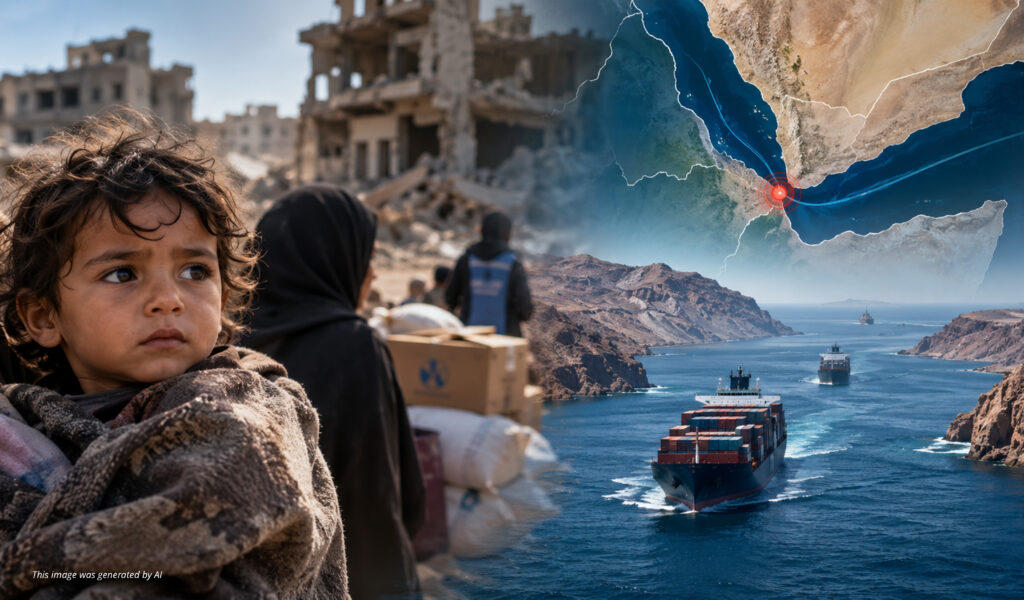
The Middle East is entering a phase of escalation, where the current crisis risks transforming into a broader regional and international conflict. The dynamic between Israel, the United States, and Iran has shifted from indirect confrontation toward direct military engagement, while expanding operations in Lebanon and Gaza significantly raise the risk of a wider war.
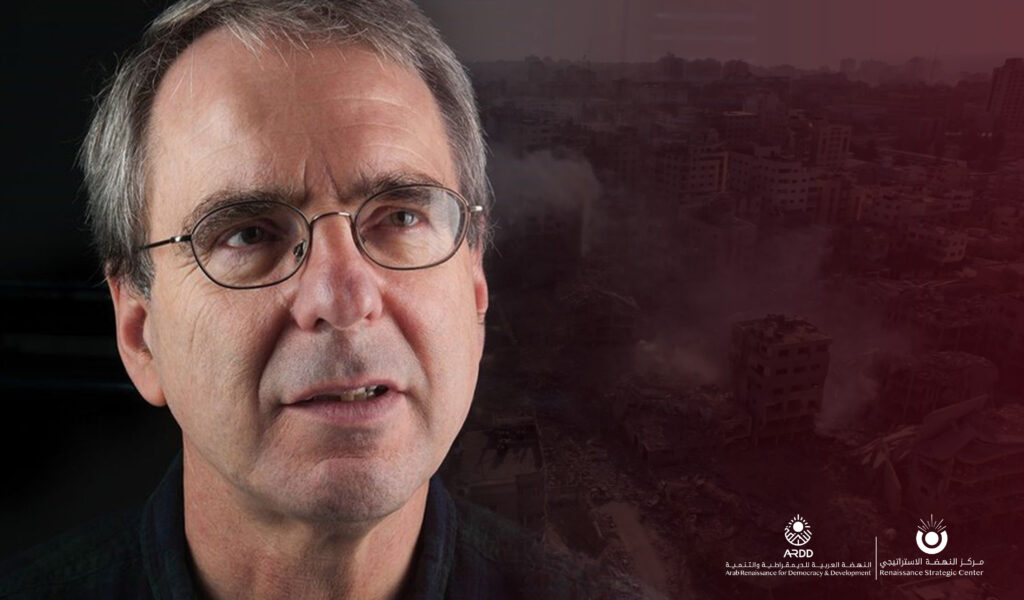
The first session of the Series Times of War: Regional Policy Dialogue Series, focused on Regional Order in Flux: Geopolitical Transformations and the Risk of Escalation, took place on Wednesday, March 18. Guest speaker Joost Hiltermann, Dutch activist, writer, and past Program Director for the Middle East and North Africa at the International Crisis Group, examined the broader geopolitical dynamics shaping the current crisis — including the evolving confrontation between Israel, Iran, and the United States, the role of regional alliances and proxy networks, and potential scenarios for how the conflict may develop. The session was facilitated by Dr. Mariam Abu Samra, Head of the Renaissance Strategic Center at ARDD.
To understand this crisis, it must be placed within structural long-term dynamics in the Middle East: colonial legacies, geopolitical rivalries, and the unresolved question of Palestine. It is precisely this need for deeper understanding that motivated us to organize the Times of War: Regional Policy Dialogue Series, hosted by the Renaissance Strategic Center at the Arab Renaissance for Democracy and Development (ARDD). Through this webinar series, leading experts, policymakers, researchers, and practitioners are invited to come together to critically analyze the geopolitical, economic, and societal implications of the evolving crisis in the Middle East.
A War of Choice: Israeli and U.S. Objectives
The session opened with an analytical framework offered by Dr. Hiltermann, who characterised the current conflict as a war of choice initiated by the U.S. and Israel. At the time of the June 2025 war, the two allies operated with diverging objectives: whereas the United States sought primarily to dismantle Iran’s nuclear programme, Israel’s ambitions were considerably broader, encompassing the elimination of Iran’s capacity to pose any strategic threat — including its nuclear capabilities, weapons infrastructure, and, ultimately, the regime itself.
The prospect of regime change in Iran was, at that juncture, deeply unattractive to the U.S., not least in light of its experiences in Iraq. Iran presents a considerably more formidable challenge: it is a larger and more complex state, it lacks an organised political opposition, its regime is deeply embedded in both the economy and civil society, and any forced transition would risk producing the kind of chaos with severe consequences for global oil markets. For Israel, by contrast, the calculus differed: regional instability carries fewer direct risks, given that displaced populations would not flow into Israeli territory. The U.S. and its allies, however, remain heavily dependent on stable oil supplies, making prolonged instability a more consequential prospect. These diverging objectives ultimately contributed to President Trump’s decision to call a halt to military operations.
What, then, accounts for the subsequent shift in U.S. posture? Several factors appear to have converged. First, the unpredictability that has come to characterise the Trump administration’s foreign policy decision-making — shaped in part by the outsized influence of the most recent interlocutor — has created an environment in which consistent strategic calculation is difficult to maintain. Prime Minister Netanyahu has exploited this dynamic with considerable effect, ensuring sustained access to and influence over the President. Second, Israel has advanced a narrative in which the June 2025 campaign represented unfinished business and in which Iran continues to pose an immediate and unresolved threat. This framing appears to have been persuasive: the United States has since aligned itself with Israeli objectives and committed to an expansive military posture — notably, however, without a clearly articulated strategic plan for achieving or defining success.
Iran’s Position: Survival at All Costs
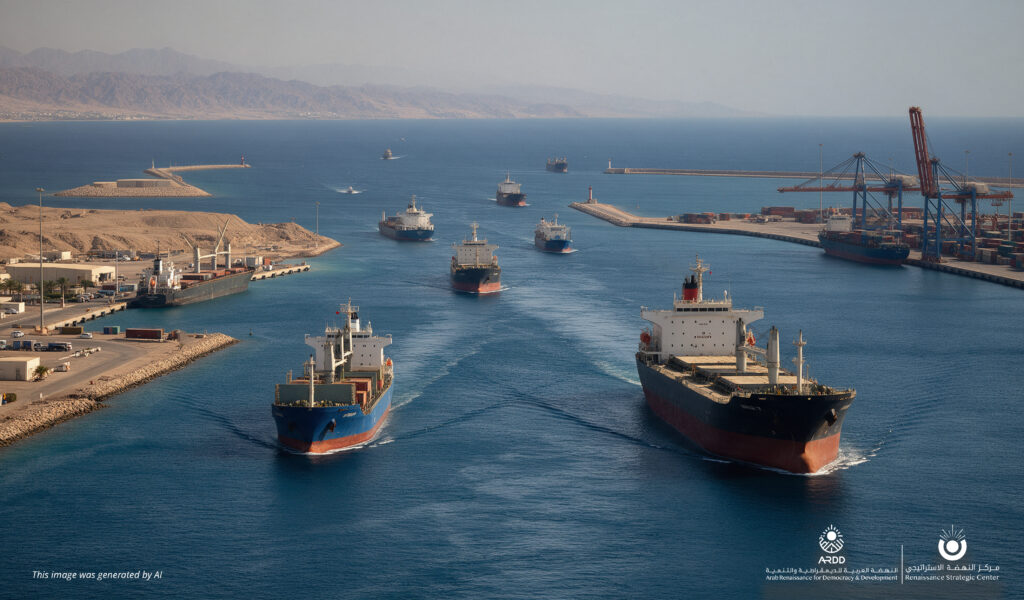
Unlike the Shah’s government, which was ousted in 1979 and fled the country to Europe and the U.S., Iran’s current leadership has no viable path into exile. The regime therefore, expects to fight for its survival without the possibility of compromise. Iran retains significant capacity to inflict economic pain on the international community, most notably through disruption of global oil supply, providing it with powerful leverage against the U.S. and its allies.
The Role of International Powers: Russia, China, and Europe
The conflict has already expanded beyond Iran, with Israel intensifying operations in Lebanon in pursuit of its broader regional objectives. Yet despite the scale of escalation, no major international power has responded proactively.
Europe
European governments are showing increasing reluctance to align with U.S. and Israeli policy. They view this as a war of choice in which they were not consulted, and see little strategic reason to join. While they are unlikely to be dragged in decisively, the risk of incremental entanglement remains, a dangerous scenario.
Russia
Preoccupied with the war in Ukraine, Russia lacks the capacity or motivation to offer Iran meaningful support. However, Russia benefits economically from the crisis: U.S. sanctions relief on Russian oil exports has allowed Moscow to expand its revenues, indirectly strengthening its economic and military position.
China
China was identified as the single international actor whose intervention could make a decisive difference. To date, Beijing has confined its Middle East engagement to economics and selective diplomacy, most notably brokering the Iran-Saudi rapprochement in 2023. The economic effects of this crisis on China have so far been limited, as it has negotiated access through the Strait of Hormuz to protect its own shipping. Beijing is also advancing steadily toward energy independence, reducing its vulnerability to regional disruption. Strategically, China appears content to watch the U.S. weaken, and may ultimately view the crisis as an opportunity, including, in the most alarming scenario, as a window to move on Taiwan, raising the spectre of wider global conflict.
How Does This End? Scenarios and Key Indicators
Dr. Hiltermann pointed out that it is extremely difficult to make predictions on the trajectory of this crisis. However, several indicators were highlighted as useful guides for short-term expectations:
- Global oil price movements and their domestic political effects in the U.S.
- U.S. midterm and primary election dynamics, a significant pressure point on the Trump administration. This is reportedly the first major U.S. military campaign that lacks broad support from the American public. Domestic discontent is generating pressure on the Trump administration.
- Availability of missile interceptor stockpiles, which are reportedly depleting, potentially exposing Israel and Gulf states to greater damage if Iran escalates.
Based on these indicators, the following scenarios were outlined:
A Declared U.S. Victory
Given the ambiguity of the stated war objectives, the Trump administration could plausibly claim success and halt the fighting, a politically convenient off-ramp. [I said this at the time, but now believe it is becoming very difficult, as Iran may decide to continue to inflict harm on the US and Israel even if the US says it wants to halt the war, leading to re-escalation]
Continued Escalation
The conflict could draw in additional actors over time. While it remains geographically contained for now, escalation beyond current boundaries is not implausible, and the session emphasised that all bets would be off if this materialises.
Negotiated Pause
Even if negotiations occur, they would likely represent unfinished business rather than a durable resolution. Iran — having observed the U.S. unilaterally withdraw from the 2015 nuclear agreement — has little reason to trust any new deal. Moreover, the regime now recognises it can outlast U.S. military engagement, particularly given domestic opposition to deploying ground troops. A post-conflict Iran will almost certainly pursue nuclear weapons capability with renewed urgency: nuclear leverage has proven effective (as demonstrated by U.S. engagement with North Korea), and Iran’s scientific capacity is already in place.
Geopolitical Implications: Toward a Multipolar Order
The session situated the conflict within a broader structural shift in international relations, the transition from the U.S.-led unipolar world order toward a multipolar system. While this transition introduces greater unpredictability, it also opens space for alternative actors to play constructive roles. The unipolar order delivered little stability or prosperity to the Middle East, and a multipolar framework, though uncertain, may not necessarily be worse for the region.
Dr. Abu Samra pointed out how, while this conflict is analysed from the level of international relations, it is crucial to also reflect on the humanitarian implications of this crisis. The reality of these macro-dynamics are completely disrupting the daily lives of people in the region. For instance, in Lebanon, we are already witnessing a refugee crisis. Regardless of how this conflict resolves, it will not produce lasting stability for these people. All foreseeable outcomes are likely to be pauses rather than conclusions, leaving a residue of unfinished business that will demand sustained diplomatic engagement. The current appetite for such engagement, however, is virtually absent in both Washington and Tel Aviv.
The Need for a Comprehensive Diplomatic Approach
Despite the current absence of dialogue negotiations, the session concluded with an urgent call for diplomatic approaches. These approaches will need to take other crises in the region into account, most notably the question of Palestine. While the conflict over Iran’s nuclear program is analytically distinct from the Palestinian-Israeli conflict, the two are deeply interconnected in terms of regional dynamics.
The risk that the current war absorbs all diplomatic attention, leaving Gaza, the West Bank, Lebanon, and other conflicts to deteriorate further, was flagged as a serious concern. The session emphasised that once active hostilities subside, the international community must immediately reinvest in diplomatic efforts to address these underlying conflicts. Allowing them to fester is the only way to guarantee the next cycle of crisis.
The Dialogue Continues
The Times of War: Regional Policy Dialogue Series will continue to explore these dynamics in the sessions ahead. Subsequent sessions will bring together additional expert voices and guest speakers to offer their perspectives on the evolving crisis, examining its humanitarian consequences, economic ramifications, and the prospects for regional and international diplomacy. Together, these sessions aim to build a more comprehensive and grounded understanding of what this conflict means for the Middle East and for the world.