Executive Summary
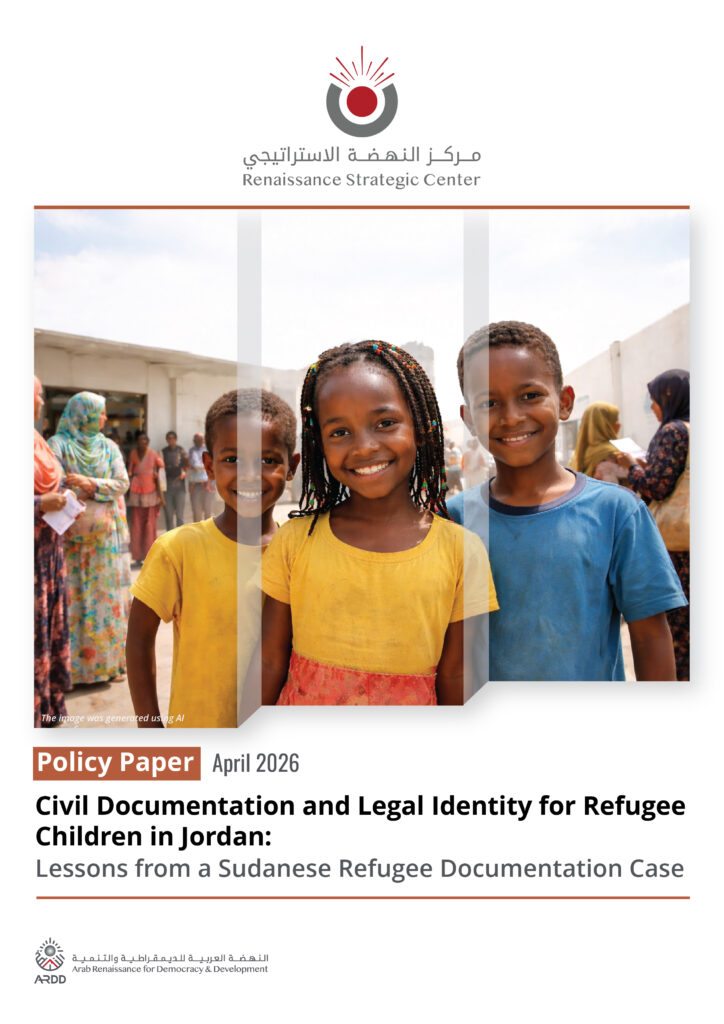
This paper examines a documentation challenge affecting Sudanese refugee children born in Jordan that arises from differences between Sudanese and Jordanian naming systems. While Jordan’s civil registration system generally follows a four-name structure ending with a family surname, Sudanese naming practices rely more heavily on ancestral names and do not consistently use fixed family surnames. As a result, birth certificates issued in Jordan for Sudanese children may contain name sequences that do not correspond with Sudanese civil records.
Although these discrepancies may initially appear minor, they can create significant long-term risks related to nationality confirmation, kinship verification, inheritance rights, and access to future civil documentation. They may also undermine prospects for safe, voluntary, and dignified return, as unresolved documentation issues can hinder reintegration, access to services, and the ability to establish legal identity in the country of origin. Correcting such errors after return to Sudan may be administratively complex and financially burdensome, particularly in light of the ongoing conflict and institutional instability in Sudan.
The paper draws on ARDD’s legal aid work with Sudanese refugees, its engagement with refugee community leaders, and its coordination with the UNHCR Legal Unit and the Civil Status and Passports Department (CSPD). Through this process, ARDD identified the issue, documented its implications, and helped facilitate practical administrative solutions.
As a result of this engagement, CSPD agreed to strengthen verification procedures for future birth registrations involving different naming systems and to facilitate correction procedures for existing birth certificates without requiring children to obtain passports from their country of origin.
Beyond the Sudanese case, the paper highlights a broader policy lesson: refugee documentation systems must be flexible enough to accommodate different naming traditions and legal cultures in order to protect refugee children from avoidable future risks related to identity, nationality, and legal status.