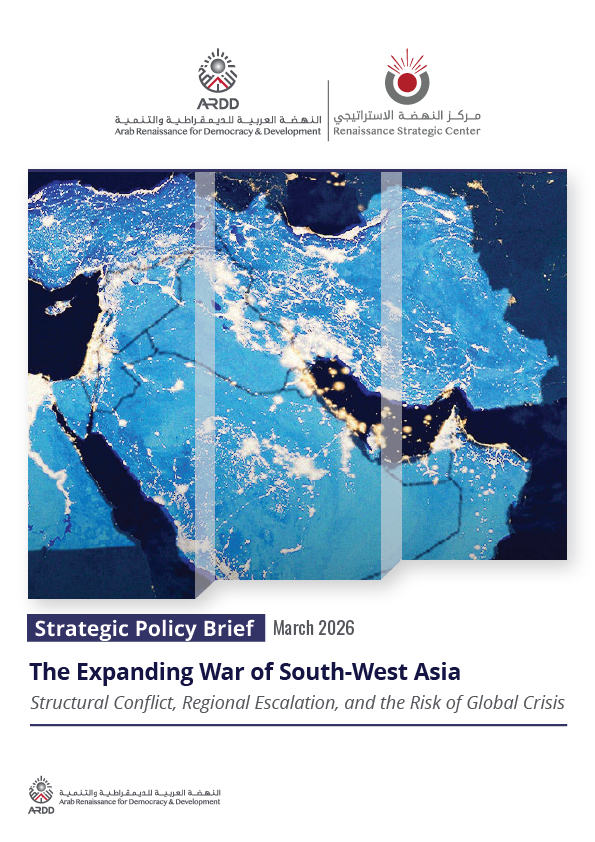
South West Asia is entering a period of escalating confrontation that risks transforming ongoing conflicts into a broader regional and potentially global crisis. At the center of the current escalation is the growing confrontation between Israel and the United States on one side and Iran on the other, unfolding across multiple arenas and drawing in both state and non-state actors. Military operations, retaliatory strikes, and heightened security postures now extend beyond a single battlefield, from Gaza and Lebanon to the Gulf and the Eastern Mediterranean, raising concerns about a wider regional war.
This strategic policy brief examines the structural dynamics behind the current escalation. It situates recent developments within a longer historical trajectory shaped by colonial legacies, geopolitical rivalries, and unresolved political conflicts, most notably the question of Palestine. These structural drivers continue to influence regional instability and shape the strategies of regional and international actors.
Beyond the immediate battlefields, the consequences of escalation extend across the region and the global system. A broader conflict could trigger large-scale displacement, disrupt energy markets and major trade routes, and deepen economic and social crises across already fragile societies.
By analyzing the evolving dynamics of regional power competition and their global implications, this brief contributes to understanding the risks of continued militarization and highlights the need for political solutions that address the structural roots of conflict, promote justice, and support sustainable regional stability.