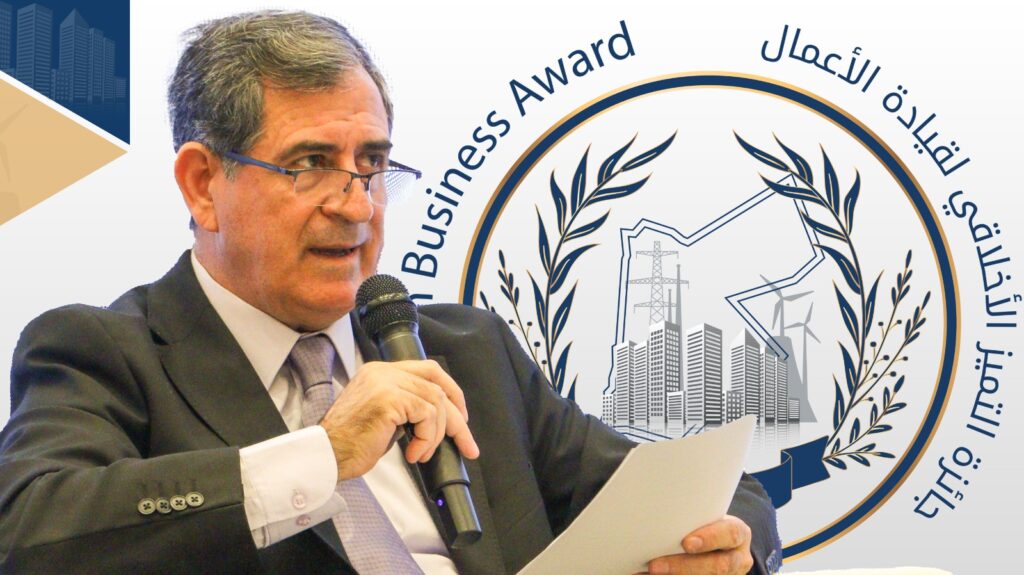
By Dr. Adli Qandah, Strategic Economic Expert and Analyst
It is my honor to join you today at the Ethics in Business Award Jordan Ceremony, an occasion that represents a pivotal moment for strategic thinking within our national economy. This event does not celebrate commercial success alone, but rather recognizes the ability to integrate ethical values at the very core of business leadership.
Today, the world is witnessing a fundamental shift in how corporate success is defined. Success is no longer measured solely by financial returns, but by the value businesses add to society, the sustainability they achieve, and the trust they build among all stakeholders.
The Arab Renaissance for Democracy and Development (ARDD), in partnership with the Jordanian Businessmen Association, presents, through this award, a practical and tangible model of what can be achieved when civil society becomes an active partner in shaping economic policies, allowing the private sector to function simultaneously as a productive and innovative force.
The Scarcity of Similar Initiatives in the Arab Region
It is worth noting that the number of initiatives and awards in the Arab region that focus on ethics in business leadership, social responsibility, and comprehensive corporate governance remains very limited when compared to the international level. This reality underscores the importance of the Ethics in Business Award Jordan, positioning it as a pioneering initiative capable of inspiring other institutions across the region.
Moreover, the award contributes to placing Jordan at the forefront of countries that successfully integrate economic achievement with ethical sustainability, transforming individual commitments into tangible economic and social impact.
Dimensions of Ethics in Entrepreneurship and Business Leadership
To clarify the overarching vision of this award and its role in strengthening both the national economy and society, the key dimensions of ethics in entrepreneurship and business leadership can be summarized into four main pillars. Together, these pillars form the strategic framework guiding this initiative.
First: Partnership Between Civil Society and the Private Sector — A Strategic Framework for Development
International experiences demonstrate that economies that have succeeded in building effective partnerships between the private sector and civil society enjoy higher levels of inclusive growth and economic and social stability.
For example:
- In Sweden and Denmark, partnerships between civil society organizations and major corporations have contributed to the development of corporate social responsibility policies that extend beyond philanthropy to include local job creation and social innovation.
- In Japan and South Korea, companies operating within cooperative frameworks with civil society have achieved higher labor productivity and more sustainable growth, while reducing social and economic risks and enhancing their international reputation.
From a theoretical economic perspective, these partnerships align with Social Capital Theory, which emphasizes that trust and reciprocal relationships among different actors constitute intangible assets that directly influence productivity and economic growth.
From this standpoint, integrating ethical values into business models is not merely symbolic or reputational; it delivers direct strategic benefits for companies. Ethics become practical instruments for growth and competitiveness, including:
- Expanding the local development base: Civil society becomes an active partner in job creation and skills development, transforming social challenges into economic opportunities.
- Strengthening trust between business and society: Companies that adopt ethically responsible practices are better positioned to build strong local and international partnerships.
- Creating a “Shared Value” model: A concept developed by Professor Michael Porter, which highlights that companies can achieve profitability while addressing social and environmental challenges—making ethics an integral component of economic growth.
Second: The Award as a National Platform for Promoting Ethical Leadership
The Ethics in Business Award Jordan is not merely a form of recognition; it is a strategic national platform designed to promote ethical thinking in business at the macroeconomic level. It contributes to redefining success in the business world—from short-term financial gain to long-term, sustainable success grounded in social responsibility, transparency, and good governance.
International examples illustrate this clearly:
- Patagonia, the American company known for its environmental and social commitment, has demonstrated that embedding ethical values in business models increases customer loyalty and attracts long-term investment.
- Unilever, through its Sustainable Living Plan, achieved sustainable financial performance while reducing environmental impact and strengthening workers’ rights and local communities—becoming a global benchmark studied in leading universities.
From an economic perspective, this aligns with Stakeholder Theory, which holds that companies cannot succeed in the long term if they disregard the interests of customers, employees, communities, the environment, and investors.
Beyond symbolic recognition, the award serves as a strategic tool for companies, enabling them to translate ethical commitment into measurable outcomes in performance, innovation, and competitiveness by:
- Embedding ethics at the core of corporate strategy.
- Turning social and economic challenges into opportunities for innovation and sustainability.
- Redefining brand value around responsibility, credibility, and trust at both local and international levels.
Third: Promoting Local Development and Economic Stability
Investment in business ethics is not a luxury; it is a sound economic investment. Companies that adopt ethically sustainable business models contribute directly to:
- Empowering local communities through decent job creation, strengthened local supply chains, and support for small and medium-sized enterprises.
- Enhancing social and economic stability by reducing risks associated with corruption and social conflict through transparency and accountability.
- Stimulating social and economic innovation by developing products and services that address local challenges while enhancing global competitiveness.
International experiences further reinforce this approach:
- In the Netherlands and Germany, companies that prioritize local development have contributed to reducing unemployment and strengthening regional economies.
- In South Africa, integrating ethics into business practices alongside community development initiatives helped companies build societal trust and reduce political and economic risk during the post-transition period.
Fourth: Ethical Leadership as a Driver of Sustainable Growth
Ethical leadership is not merely a moral stance; it is a strategic asset that drives sustainable growth and strengthens institutional resilience. Companies that place ethics at the center of decision-making:
- Build strong reputations and credibility among investors and customers.
- Ensure long-term sustainability through proactive management of ethical and social risks.
- Foster sustainable innovation by transforming ethics into a platform for integrated economic and social solutions.
Globally, leading companies have demonstrated that ethical commitment and transparency are fundamental drivers of innovation and sustainable growth, including Google and LEGO, both of which have embedded ethics and responsibility into their business models while achieving global success.
From a theoretical standpoint, this aligns with Institutional Excellence Theory, which holds that organizations that uphold high ethical standards enjoy sustainable competitive advantages by fostering trust, credibility, and internal commitment across all levels of leadership.
Conclusion
What we are celebrating today is not merely an award ceremony, but a strategic framework for sustainable national growth—one that reflects Jordan’s ability to foster a balanced business environment where economic performance aligns with social responsibility.
I commend the Arab Renaissance for Democracy and Development (ARDD) for launching this pioneering initiative and for its effective partnership with the Jordanian Businessmen Association. I also commend the participating companies that have chosen to be part of a business model that bridges ethics and economics, profitability and responsibility, innovation and sustainability.
I hope the Ethics in Business Award Jordan serves as a true starting point toward a Jordanian economic model that balances growth with ethics, one that becomes a regional benchmark and positions integrity, transparency, and ethical leadership as foundations of national competitiveness.