Blogs and Articles



Analytical Article by: Adv.Rami Qweider and Khaled Al-Jum’a
Enhancing the effectiveness of the social security system requires addressing the existing gaps that prevent contributors from obtaining a sustainable pension, particularly in light of the increasing reliance on lump-sum compensation. This necessitates establishing clear mechanisms for calculating contributions, facilitating contributors’ continuity in the labor market, and reducing the barriers women face in accessing full retirement, in order to ensure the system achieves its primary goal of providing stable financial protection in old age.
Impact of the Proposed Amendments on the Rights of Social Security Contributors:
The proposed amendments to the Social Security Law affect the ability of private sector contributors to access a full pension, due to the unstable nature of the labor market, frequent employment interruptions, and challenges in calculating contributions that reduce workers’ ability to benefit from their actual years of service, making full retirement a difficult goal for many contributors to attain.
Due to these difficulties in accessing full retirement, the wording contained in the currently proposed draft amendments has come somewhat differently. It states that if the insured person’s service ends without completing the conditions for entitlement to an old-age or disability pension, and if one of the cases of exiting the scope of the law is met in accordance with the regulations issued pursuant to it, then a lump-sum compensation shall be paid to them or to their eligible beneficiaries.
The fundamental shift here lies in the fact that the text links entitlement to cases of exiting the scope of the law, which will be determined later by implementing regulations. This means that the details will not be included in the law itself, but rather in regulations that will be issued after the amendment to define these cases, which may open the door to reorganizing cases of lump-sum compensation and most likely expanding them beyond the current system, in light of the legislator’s awareness of the challenges many workers face in reaching the statutory retirement age.
With the difficulty of completing the conditions for full retirement, an additional challenge emerges in the mechanisms for calculating contributions in the private sector, which directly affect the chances of obtaining a full pension. A system for reducing contributions to old-age, disability, and death insurance has been applied to workers in private sector establishments, specifically new entrants to the labor market under the age of thirty, to encourage youth employment and reduce the cost of contributions for employers in light of high unemployment rates.
The system applies a reduction to part of the contributions paid for pension purposes under Article (3), at a rate of 40% for small enterprises and 20% for medium enterprises. Given that 99.5% of private sector companies in Jordan fall within micro, small, and medium enterprises, the majority of workers in the sector are subject to this reduction due to the large share of these institutions in the Jordanian economy. Although years of service remain fully counted for beneficiaries, the pension is calculated based on the reduced contributions, which lowers the actual value of the pension even when all years of service are completed, and thus the expected pension becomes lower than what would otherwise be due.
Although the system allows the worker the option to pay the difference in contributions to reach full contributions, it shifts the burden of maintaining pension rights onto the worker, while exempting employers from any additional responsibility. In light of the instability of work in the private sector and low wages, many workers may not be able to pay this difference, which effectively leads to a decline in the expected level of pension protection.
Accordingly, with the difficulty of completing the contributions required to reach full retirement, it is expected that an increasing number of contributors will turn to lump-sum compensation instead of obtaining a full and sustainable pension. The law allows a contributor who has not met the retirement conditions to receive compensation under specific conditions, which is calculated at rates ranging between 10%, 12%, and 15% of the total wages subject to deductions. However, this compensation is often much lower than what the contributor has actually paid in contributions.
Let us assume, for example, a middle-income contributor who received compensation at 12% of total wages, assuming that they contributed for only ten years and that their average salary was around 200 JOD per month:
Total contributions paid = 200 JOD per month × 17.5% × 12 months × 10 years = 4,200 JOD.
The future value of these deductions at a 5% investment return = 5,500 JOD immediately after the ten years, and it increases further thereafter at a rate of 5% for each year the Social Security retains it before paying it to the contributor.
The value of the lump-sum payment = 12% of total wages = 200 × 12% × 12 × 10 = 2,880 JOD. This means that the contributor received only two-thirds of what they paid in contributions, or half of what Social Security obtained from contributions and investments.
That is, the Social Security achieved a gain = 5,500 – 2,880 = 2,620 JOD for each contributor who received a lump-sum compensation.
This individual calculation shows the large gap between what the contributor pays and what they actually receive, demonstrating that the compensation often does not reflect the true value of the contributions paid and ultimately leads to the beneficiary losing the opportunity to obtain a permanent and sustainable pension if they choose to rely on the lump-sum payment.
Labour Law as a Driver of Insurance Gaps and Reliance on Lump-Sum Compensation
Absence of “Age Protection” in Labour Law
The Jordanian Labour Law grants employers broad flexibility in terminating employment contracts, whether fixed-term or open-ended, under provisions such as Articles 21, 23, 28, and 31. Meanwhile, the Social Security Law has raised the retirement age to 65 and increased eligibility conditions, creating a clear discrepancy between the two laws. This discrepancy places workers, especially in the later stages of their careers, in a vulnerable position, as they may be dismissed due to higher wages linked to seniority at a time when their chances of securing new employment diminish, while they are not yet eligible for a pension. As a result, this phase becomes one of instability and anxiety, giving rise to a category of “insurance-suspended” individuals, those who exit the labor market without income or pension protection for years. This weakens the effectiveness of the social protection system and calls for legal reform that enhances protection against unjustified termination.
Any reform that raises the retirement age without providing parallel protection in labour law exposes a wide segment of workers, particularly older workers, to the risk of forced exit from the labour market before reaching pension eligibility age. To address this structural imbalance, reference can be made to well-established legal principles in comparative systems, particularly in the United Kingdom and Australia, regarding the concept of “genuine redundancy.” This principle is based on a core rule: termination of employment on the grounds of “job elimination” is only lawful if it can be proven that the objective need for the position itself has genuinely ceased, rather than being a pretext to replace the employee with someone less costly or younger. It also entails prohibiting reappointment to the eliminated position, or a substantially similar one, within a reasonable period, as re-advertising or refilling the same role constitutes evidence of sham redundancy and abusive termination.
This standard prevents legislative circumvention through superficial changes in job titles or dismissals disguised as restructuring, and subjects termination decisions to objective oversight that balances managerial flexibility with workers’ right to job security. In the context of the proposed amendments to the Social Security Law, adopting a similar principle in the Jordanian Labour Law becomes a legislative necessity, especially with the increase in retirement age and required years of service, to ensure that a category of workers is not created who are excluded from the labor market in their final working years without job protection or pension income.
Aligning the Social Security and Labour Laws through the adoption of a precise definition of genuine redundancy and the prohibition of sham reappointment would help safeguard insurance reform from its unintended consequences and achieve the necessary balance between fund sustainability and the preservation of workers’ professional and economic dignity in the later stages of their careers.
When linking this to the reality discussed in the draft Jordanian Social Security Law and its relationship with Labour Law, it becomes clear that under the new draft, Labour Law does not possess the same level of rigor in defining “genuine redundancy” or “restructuring.” An employer may terminate older workers and then rehire under different job titles, and with the increase in retirement age, the worker finds themselves without protection and without a pension.
In this case, raising the retirement age without a corresponding amendment to Labour Law becomes a pressure factor on older workers. Their contracts may be terminated before reaching pension eligibility age, leaving them outside the labor market and without immediate entitlement to a pension. The problem is further exacerbated by the proposed shift in unemployment insurance to a savings-based account, where workers are forced to deplete their savings to cover the waiting years, ultimately reducing the value of their future pension.
Thus, the issue is not the increase in retirement age itself, but rather the absence of safeguards that prevent early exclusion and ensure a safe transition from work to retirement. Aligning Labour Law with the requirements of insurance reform, through adopting a precise definition of genuine redundancy and prohibiting sham reappointment, is a fundamental condition to prevent reform from creating a new protection gap instead of enhancing sustainability.
The “Cost and Productivity” Dilemma in the Private Sector
In the absence of a legislative framework that provides special protection for older workers or offers economic incentives for employers to retain them, raising the retirement age may lead to counterproductive outcomes in the labor market. Employees approaching the age of sixty are often at the highest levels of the job ladder, with peak wages, which in turn increases the value of the social security contributions due for them.
Thus, the problem is not in raising the retirement age itself, but in the absence of safeguards that prevent early exclusion and ensure a safe transition from work to retirement, an issue that directly reflects the cost and productivity dilemma in the private sector. Without a legislative framework that protects older workers or incentivizes employers to retain them, raising the retirement age may accelerate their dismissal rather than prolong their participation in the workforce.
From another perspective, some firms may consider replacing a higher-paid employee with younger, lower-cost workers as a way to achieve short-term financial savings. In the absence of clear restrictions on termination at this stage of life, cases of forced replacement may increase, not necessarily driven by age discrimination, but by cost-restructuring motives.
In such a scenario, raising the retirement age without parallel amendments to the Labour Law or without providing incentives to retain experienced workers becomes an indirect pressure on older workers. This increases the likelihood of their exit from the labor market before reaching pension eligibility age and exacerbates the phenomenon of “insurance suspension” that this paper seeks to highlight.
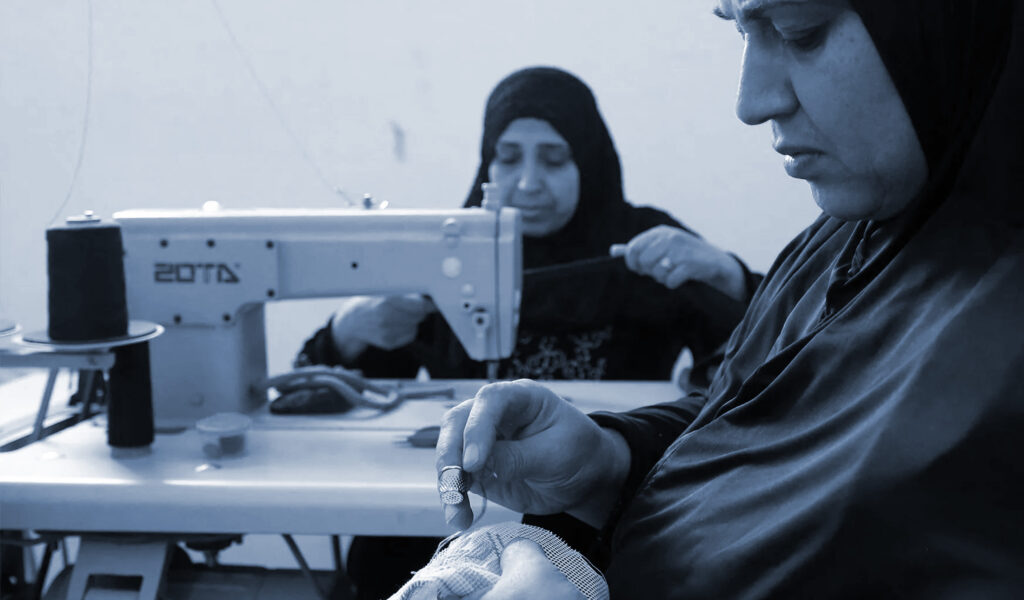
Proposed Transformations in the Pension System and Their Impact on Women
Women may be the most affected by this trend, not only due to the nature of their career paths, but also as a result of previous policies related to the social security system. The abolition of family allowance insurance, which was one of the insurance schemes included in the first Social Security Law in Jordan in 1978, directly affected mothers who leave work to care for children in large families, especially when the number of young children exceeds two or three. This insurance was also linked to maternity insurance, meaning that its cancellation reduced one of the mechanisms that provided social protection for women.
The impact of this measure has extended into the current labor reality, making it more difficult for women to remain in the labor market and continue contributing to social security. This has pushed many women to resort to lump-sum compensation instead of obtaining a sustainable pension. In many cases, this leads to the termination of their relationship with social security if they do not return to the labor market later, reducing their chances of completing the contributions required for retirement. If they wish to continue, voluntary participation requires the ability to pay full contributions, which is difficult for many women due to the high cost of 17.5% of the wage subject to deduction, borne entirely by the worker.
At the same time, the law allows women to obtain lump-sum compensation in multiple cases that are not available to men, such as the end of service of a married insured woman who dedicates herself to family responsibilities, or the end of service of a widowed or divorced insured woman who dedicates herself to family responsibilities. This reflects the specific challenges women face in accessing a sustainable pension.
Cumulative data clearly reflect this trend, particularly when examining the gap between women and men. The cumulative number of retired women has reached around 66,000, compared to 140,000 women who have received lump-sum compensation between 2004 and 2024, excluding the years 2020 and 2021, which were affected by the COVID-19 pandemic. This indicates that the number of women who exited the system through compensation far exceeds those who retired. At the level of all contributors, the cumulative number of retirees is around 360,000, compared to approximately 193,000 cases that received lump-sum compensation, also excluding the years 2020–2021.
These figures show that reliance on lump-sum compensation is high among social security contributors in general, and more pronounced among women in particular. This trend reflects a gradual erosion of the protective role of social security, as it shifts from a system aimed at providing sustainable retirement income to a mechanism for disbursing limited financial compensation that does not ensure long-term economic security. With the retirement age raised to 65 for men and 60 for women, it becomes increasingly difficult for women to reach full retirement, especially since their career paths are often characterized by long interruptions due to marriage, childcare, illness, or job loss.
In addition, the high cost of voluntary contributions after exiting the labor market makes continued participation difficult, reducing women’s chances of completing the required number of contributions for retirement. All these factors combined indicate that the proportion of women who will reach full retirement will be lower compared to men, and is already limited even under the current law, reflecting the direct impact of the proposed amendments on the sustainability of social protection for women.
Conclusion
The expansion of lump-sum compensation in place of mandatory retirement raises a fundamental question about the very function of social security. Social security was not originally established as a system for disbursing temporary cash compensation, but as a social protection system based on providing sustainable pensions that protect individuals in old age.
The increasing trend toward relying on lump-sum compensation will also place additional pressure on the National Aid Fund, as many individuals will find themselves without a sustainable pension and will be forced to depend on state support after exhausting the cash amounts they received. This is particularly concerning given that most beneficiaries tend to spend the compensation in full without saving a portion for the future, which may increase the financial burden on the government in the long term.
From this perspective, the success of the proposed amendments depends on the ability of the relevant authorities to achieve a careful balance between the sustainability of the fund and the protection of contributors’ pension rights, ensuring that social security remains a genuine tool for financial security in old age rather than merely a mechanism for temporary financial settlement.
These observations indicate that social security will not achieve its primary objective of providing sustainable retirement income unless urgent reforms are undertaken to address existing gaps and support contributors, particularly in the private sector and women.
From this standpoint, a set of integrated reforms is recommended to enhance system sustainability and protect pension rights, including:
Recommendations
References