Investing in Human & Youth Civic and Political Participation in Jordan
This policy brief focuses on human capital and how it affects political and civic participation in Jordan among youth, women, and other sectors of society, as well as notions of active citizenship. It also explores the connections between a holistic approach to development – that focuses on human well-being and needs and thus ensures social […]
The General Pardon Law No.5 of 2024 and Its Impact on Refugees: Insights from ARDD
The Jordanian General Pardon Law No. 5 of 2024 is essential legislation for pardoning specific crimes committed before March 19, 2024. It provides a path to rectify the legal status of many, including refugees in Jordan. This paper examines the practical application of Jordan’s Refugee Pardon Law, focusing on The Arab Renaissance for Democracy and […]
Youth Political Participation in Jordan between Political Knowledge Production and Practice
This policy brief highlights the first session of the youth participation policies lab, entitled: “Political and Civic Participation and its Importance for Democracy, Governance, and Human Development” according to the methodology of the policy lab work, which was held by ARDD in partnership with the Center for Strategic Studies at the University of Jordan, within […]
ICJ Ruling on Advisory Opinion
Legal Consequences Arising from the Policies and Practices of Israel in the Occupied Palestinian Territory, Including East Jerusalem
On 19 July 2024, the International Court of Justice issued a historic ruling declaring the Israeli occupation and associated regime of systematic discrimination – amounting to racial segregation and/or apartheid – unlawful. Flowing from this illegality, it calls on Israel to end the occupation and associated regime, evacuate the settlements, dismantle the wall, provide full […]
TVET and Skills Education for all: Enhancing Livelihood Opportunities for Jordanian and Refugee Youth
According to the United Nations High Commissioner for Refugees (UNHCR), Jordan is home to 723,886 registered refugees. While Syrians constitute the bulk of the refugee population, other nationalities have sought and found refuge in Jordan, such as Yemenis, Somalis, and Sudanese. Despite UNHCR’s advocacy of the “One Refugee Approach,” the needs of these particular refugee […]
TVET and Skills Education for all: Enhancing Livelihood Opportunities for Jordanian and Refugee Youth
According to the United Nations High Commissioner for Refugees (UNHCR), Jordan is home to 723,886 registered refugees. While Syrians constitute the bulk of the refugee population, other nationalities have sought and found refuge in Jordan, such as Yemenis, Somalis, and Sudanese. Despite UNHCR’s advocacy of the “One Refugee Approach,” the needs of these particular refugee […]
At the Center: Towards a Gender-Sensitive Agenda for Social Protection in Jordan
Women worldwide face risks, including limited access to education, inadequate health services and coverage, gender-based discrimination, unpaid care work, high poverty rates, and increased vulnerability in old age due to the absence of adequate social protection systems. Social protection programs can be an effective tool to mitigate and address these risks. Social protection can be […]
MENA Green Voices Challenge A call for joint action and innovation to respond to climate change threats and opportunities
Youths are at the forefront of the climate movement that emerged in the 1980s and gained traction in 2019 with the global climate strike organized by Fridays for Future and Earth Strike. Despite the fact that their region is warming at twice the global average[1], surveys show that youths in the Middle East and North […]
Debt and Imprisonment in Jordan
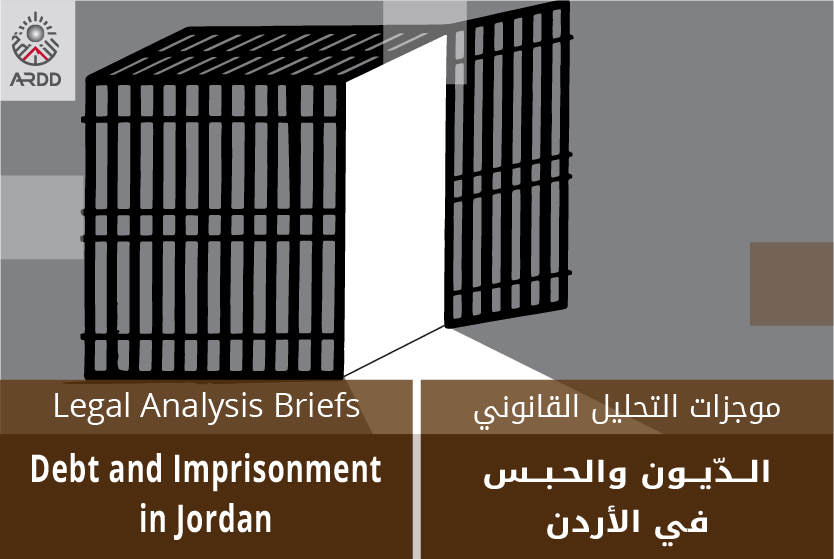
Unpaid debt in Jordan is widespread, affecting almost 2% of its population. Most recent estimates regarding people with unpaid debt in Jordan include 157,367 individuals who are wanted in civil debt cases and 30,669 individuals who have issued checks bounced due to insufficient funds.1 Among those facing civil debt cases, 8,7% possess a debt of […]
Identifying and overcoming obstacles to the creation of MSMEs in Jordan
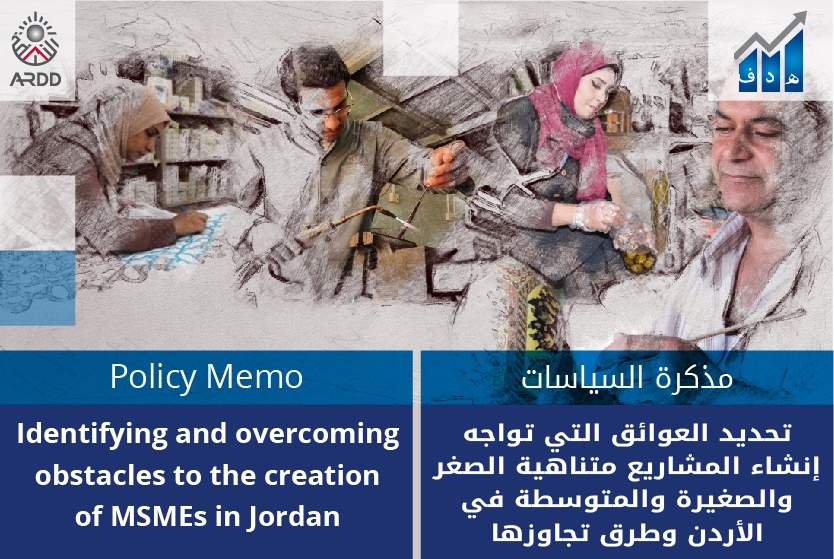
Whereas entrepreneurship is recognized by the government as an engine of economic growth, job creation and prosperity of its country, people and future, it remains recognized by relevant stakeholders, starting with entrepreneurs themselves, as a weak link in Jordan’s labor market. Despite the emergence of an entrepreneurship ecosystem notably composed of technical and financial governmental […]