By Giulia Zorzo, RSC Intern
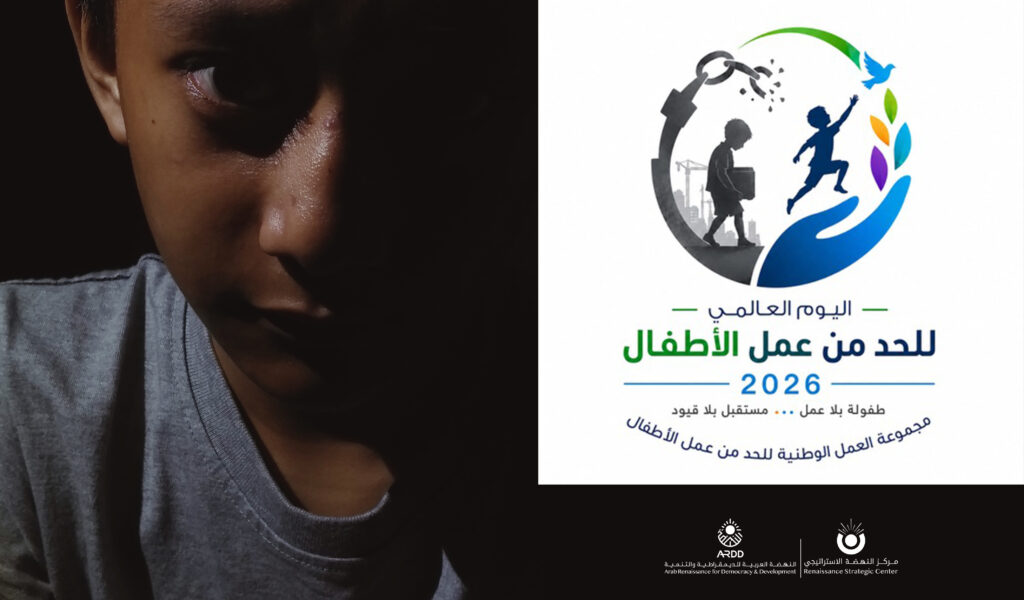
Jordan is widely recognized as a beacon of stability, hospitality, and progressive development in a historically volatile region, consistently demonstrating an extraordinary commitment to humanitarian relief and social progress. However, decades of geopolitical shocks, regional refugee crises, and global economic pressures have placed an immense strain on the country’s resources and infrastructure. Under the weight of these external socio-economic forces, child labor continues to occur in urban informal sectors and remote fields, as in downtown Amman, the industrial zones of Zarqa, or the rural fields of the Jordan Valley. Children, some looking no older than ten, can be seen wiping down car windshields or stacking heavy crates in local markets.
Child labor in Jordan is not an isolated issue; it reflects a broader crisis, a negative economic coping mechanism for many families pushed to the brink. National estimates indicate approximately over 70,000 Jordanian children are active in the labor market, with over 50% of working in hazardous conditions, particularly in the automotive (29%) and agricultural (28%) sectors. These children are subjected to exploitation that strips them of their rights and perpetuates cycles of poverty. Despite the enactment of national policies establishing a strict minimum working age of 16 and 18 for hazardous work, the gap between legal frameworks and the harsh realities of economic survival continues to widen.
The Data Landscape
Global efforts have aimed to eradicate child labor, particularly since the establishment of the Sustainable Development Goals (SDGs), which sought to eliminate all forms of child labor by 2025. The deadline has officially passed but the world has failed to achieve this goal. Nevertheless, the most recent national statistics from the 2016 National Child Labour Survey (NCLS) conducted by the Center for Strategic Studies of Jordan estimates that 75,982 out of 4,030,384 children aged 5-17 in Jordan are engaged in child labor, with 44,917 in hazardous work. Alarmingly, reports by Jordan Labor Watch in November 2025, suggest that these numbers are rising. This negative trend contrasts with official national policies aimed at reducing child labour, raising concerns about the effectiveness of interventions and the underlying socioeconomic issues driving children into work. Moreover, quantifying child labor remains a challenge due to the lack of updated data. The fact that the most comprehensive national quantitative data dates back to the 2016 survey is a crisis in itself. It proves that child labor is increasingly slipping into the dark, unregulated corners of the informal economy, leaving thousands of children invisible to official statistics. The ongoing economic hardships and deteriorating living conditions push more children into work, often in informal and unsafe settings.
The Legislative Paradox: Robust Protections, Fractured Enforcement
Jordan acknowledges the severity of child labor and has developed a robust legal framework and institutional mechanisms to combat it. The Kingdom has ratified all major international conventions safeguarding children against economic exploitation. Jordan is one of the first countries that ratified the international conventions related to the protection of children from economic exploitation, namely the Convention on the Rights of the Child and its two protocols, and the conventions affiliated with the (ILO) International Labour Organization (Minimum Age Convention No. 138, and the Worst Forms of Child Labour Convention No. 182).
The domestic laws most relevant to the legal protection of children in Jordan are the following:
- Jordanian Constitution of 1952. The Constitution contains the right to the protection of childhood from abuse and exploitation.
- Labour Law (Law No. 8 of 1996):This is the primary legal anchor that prohibits the employment of children under 16 years of age. It allows light work for juveniles aged 16–18 only under strict health, safety, and hour limitations.
- Child Rights Law of 2022 (Law No. 17 of 2022). This law provides an overall framework for child rights protection although details of specific areas of law, including implementation of rights, are set out in more specific legislation.
- Juvenile Law (Law No. 32 of 2014). The Juvenile Law and related regulations cover most aspects of juvenile justice. This includes objectives of juvenile justice, child-specific institutions, collaboration among juvenile justice professionals, age of criminal responsibility, aspects of criminal proceedings rights of children at different stages of the juvenile justice process and sentencing, including custodial sentences and non-custodial alternatives.
- Child Labour Units: Task forces within the Ministry of Labour and the Ministry of Social Development are dedicated to combating child labor.
- National Framework to Combat Child Labour (NFCCL): Standardizes identification protocols across municipalities.
- Electronic Child Labour Monitoring System (e-CLMS): A digital database for tracking and protecting working children.
To address economic challenges, Jordan has introduced two significant long-term strategy policy roadmaps:
1. National Strategy for the Reduction of Child Labour (2022–2030): Assigns roles to public ministries, civil NGOs, and private stakeholders to combat child labor and prevent school dropouts.
2. National Strategy to Prevent Human Trafficking (2024–2027): Focuses on systemic prevention, victim protection, and the prosecution of forced child begging networks.
These instruments define the responsibilities of ministries, NGOs, and stakeholders in preventing child labour and responding to identified cases, encompassing the prevention of child exploitation through prevention, protection, and prosecution measures. Employing children under the age of eighteen in hazardous work is also prohibited in Jordan. The Jordanian Ministry of Labour (MoL) has specified a list of hazardous work that mainly covers all sectors.
However, a deeper analysis reveals a stark contrast between rigorous legislative text of Jordan’s labor codes and the daily realities of enforcement. Despite numerous legal instruments and institutional efforts, child labour in Jordan remains a critical issue. The problem is that the root causes are not fully identified and targeted by current actions, raising alarming concerns about the practical effectiveness of local interventions and the underlying socioeconomic issues driving children into work. The persistence of child labour is not solely a failure of implementation of the current laws, it reflects unaddressed economic drivers, legislative gaps in protection for non-citizen children, and the absence of adequate social protection systems. Furthermore, the limited capacity of the labour inspection hinders monitoring and protective intervention.
The Root Causes of Child Labor
According to Jordan Labor Watch, the primary driver behind child labor in Jordan is socioeconomic instability. Many households face precarious economic conditions and rely on children’s income for survival. Widening poverty and declining household income are the primary drivers pushing families to send their children to work. This trend has been reinforced by austerity-driven economic policies, lower household purchasing power, and stagnant wages that fail to keep pace with rising prices, factors that have collectively worsened living standards for large segments of society. As a consequence, children are pushed to sacrifice their education to enter the labour market and support their families.
Civil Society Organizations (CSOs) like the Arab Renaissance for Democracy and Development (ARDD) or Tamkeen for Legal Aid and Human Rights highlight that many working children come from marginalized groups, driven by poverty to support their families. Common sectors where child labor is prevalent include: restaurants and coffee shops; construction sites; mechanical and repair workshops; street vending and tourism. They are usually inadequately remunerated for their work and paid below the minimum wage of JD290 for Jordanians and JD150 for non-Jordanians and are made to work overtime for free.
Factors contributing to this crisis include:
- High Unemployment Rates: Approximately 21%
- Rising Poverty: Estimated at 24%
- Declining Household Purchasing Power: Due to stagnant wages and increasing living costs.
In addition to economic factors, other structural challenges contribute to the dramatic situation. Child work has been normalized by embedded social norms in some communities, while limited access to social services and barriers to education render children more likely to drop out and enter informal work environments as a coping mechanism. Stuck between misery and danger, some children have to face severe long-term consequences. In fact, beyond depriving children of their rights to education, play, and healthy development, child labour also contributes to the emergence of new generations of poor and unskilled workers, undermining sustainable economic growth and deepening intergenerational cycles of poverty.
Child Labor and Displacement
The Syrian crisis has exacerbated child labor issues in Jordan. Following the outbreak of the Syrian crisis in 2011 and as a result of displacement of more than 5.5 million Syrians who mostly sought refuge in neighboring countries, such as Jordan and Lebanon, the Syrian refugees and the affected vulnerable host communities were faced with new challenges related to the increasingly dire economic and living conditions. The economic strain on refugee families has pushed children into the labor market as a survival strategy, being the only providers in the family. Based on the Jordan National Child Labour Survey (NCLS), out of the roughly 70,000 to 76,000 total working children captured nationwide, Syrian refugee children officially accounted for approximately 14.6% to 15% of the total surveyed workforce (which computes to roughly 11,000 children). Children, particularly from vulnerable backgrounds like Syrian refugee families, face severe exploitation, often earning below the minimum wage and working under hazardous conditions.
Conditions faced by these children include:
- Long working hours with exposure to hazardous materials
- Physical and psychological abuse
- Limited access to education, trapping them in cycles of poverty
Research shows that refugees push their children into the labour market, where they can face exploitative conditions, as a coping mechanism to help in making a living for their families where adult refugees’ work is prohibited by the law. These conditions include long working hours, exposure to dust and pesticides, unsafe transportation, exposure to snakes and scorpions among other risks. In addition to that, children are exposed to physical and psychological abuse by employers. Girls who mainly work in small remote farms are susceptible to sexual and gender-based violence (SGBV); however, there is not sufficient data to inform this. Generally, these children are often missing the opportunity for basic education and skills acquisition and are likely to remain trapped in a vicious cycle of poverty.
CSOs at the Frontline
Despite numerous official and non-official initiatives to combat and reduce child labour, Despite numerous official and non-official initiatives to combat and reduce child labour, the root causes remain largely unaddressed. Addressing child labor in Jordan requires a multifaceted approach that targets root causes. This includes investing in education, poverty alleviation, and social protection systems. Organizations like the Arab Renaissance for Democracy and Development (ARDD) are actively collaborating with national and international frameworks to combat child labor through initiatives aimed at reducing school dropout rates and ensuring access to education. ARDD is part in the national committee against child labour; it partners with the International Labour Organization (ILO) in its mission. Furthermore, ARDD operates a highly active Legal Aid Department that pro bono represents vulnerable families and minors who have suffered severe workplace abuse and exploitation (such as securing court-mandated financial compensations for children injured in hazardous construction sites). By bridging grassroot legal awareness sessions, ARDD ensures vulnerable families understand the legal protection tools available to them. Finally, ARDD has implemented projects such as the “Investing in the Future” project and the National Alliance for the Future of Education in Jordan (NAFE) to reduce school dropout rates and address the educational needs of the most vulnerable, both host communities and refugees.
The Need for Systemic Change
Child labour in Jordan is not a problem of lacking legislation, but rather an interlinked matter of economic hardship and social vulnerability. Monitoring and reporting systems are important tools for documenting cases, but combating child labor requires comprehensive policies grounded in strengthening economic protection, improving the quality of education, and ensuring equitable social services that prevent families from slipping into poverty.
A collective effort from the government, civil society, and international partners is essential to protect the rights and futures of children across Jordan. Until these socioeconomic drivers are directly dismantled, the promise of the SDGs will remain an unfulfilled ambition, and thousands of children will continue to bargain their future for survival.