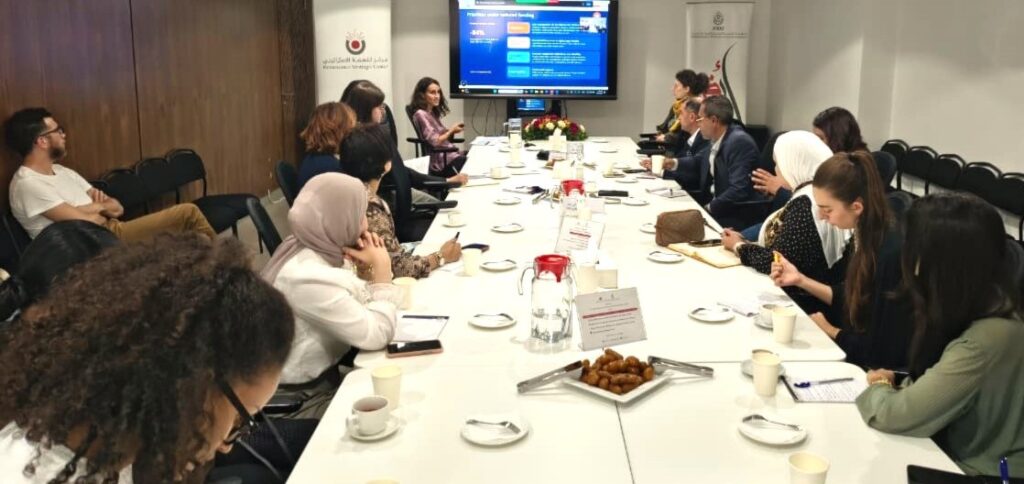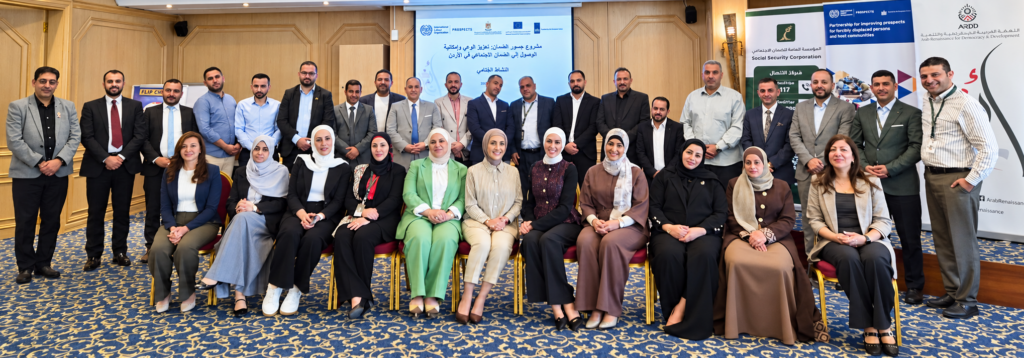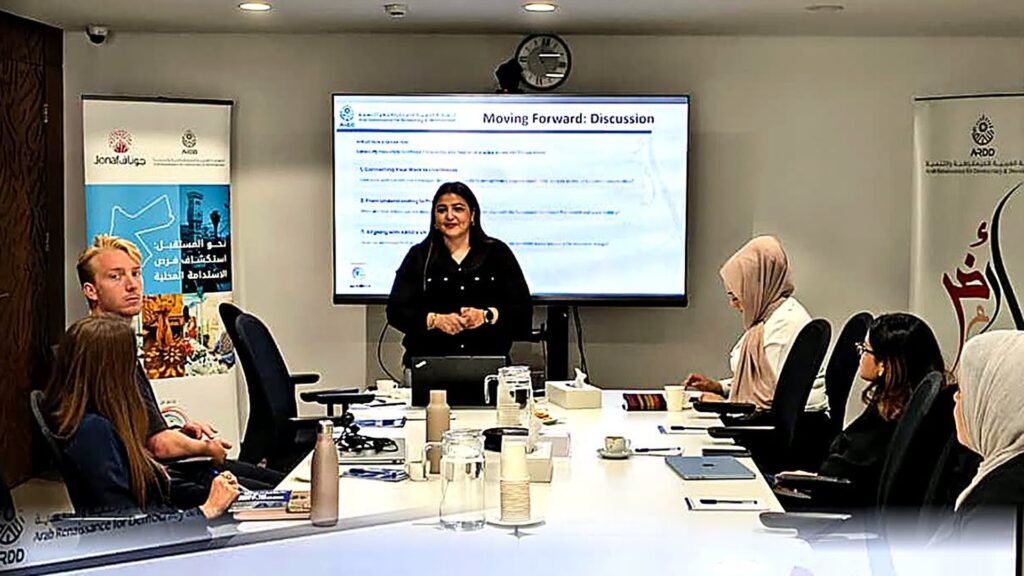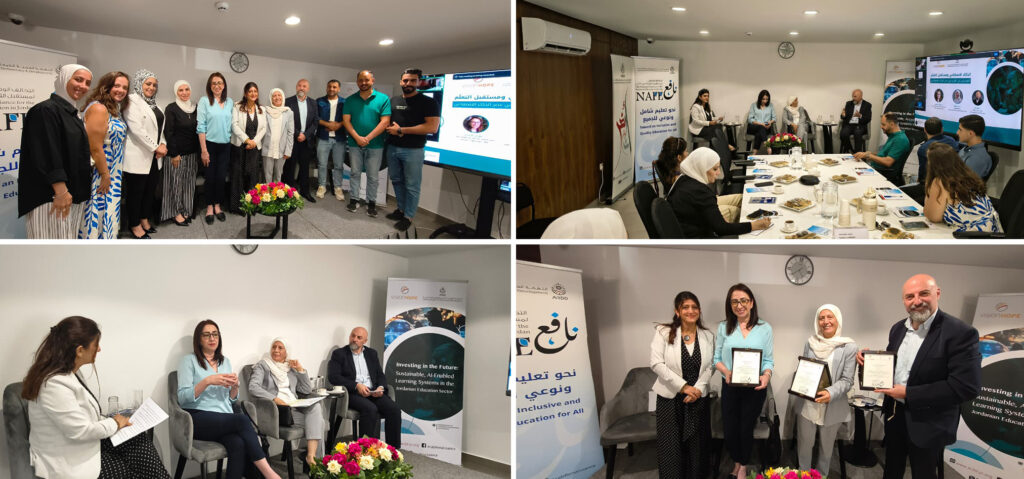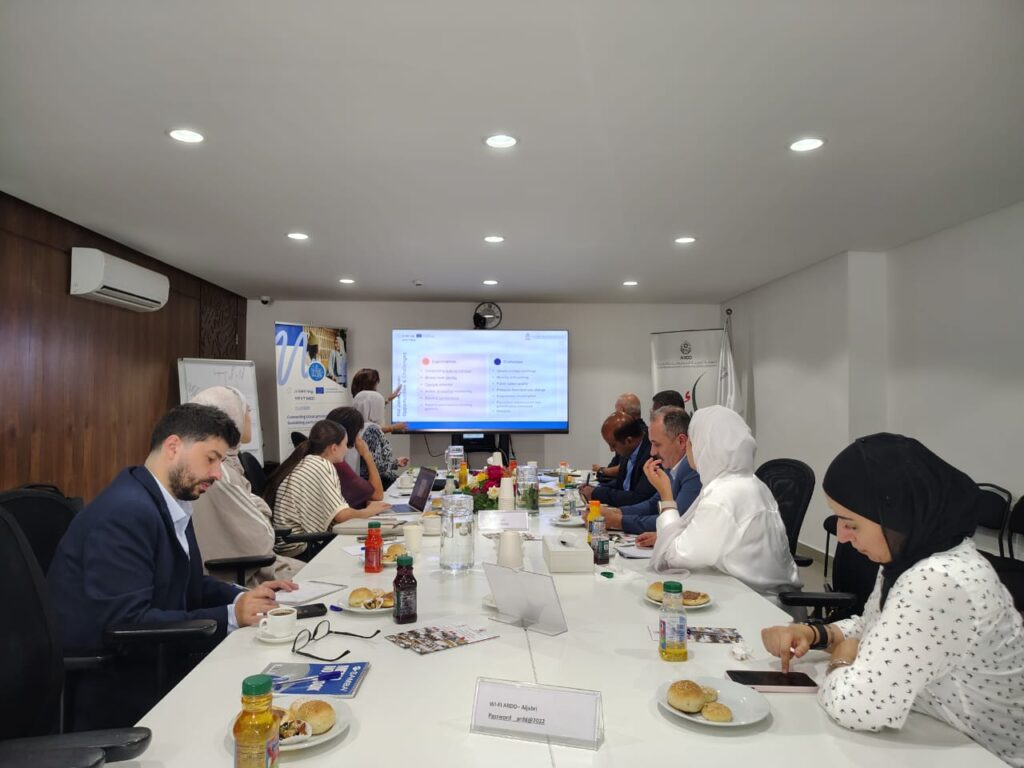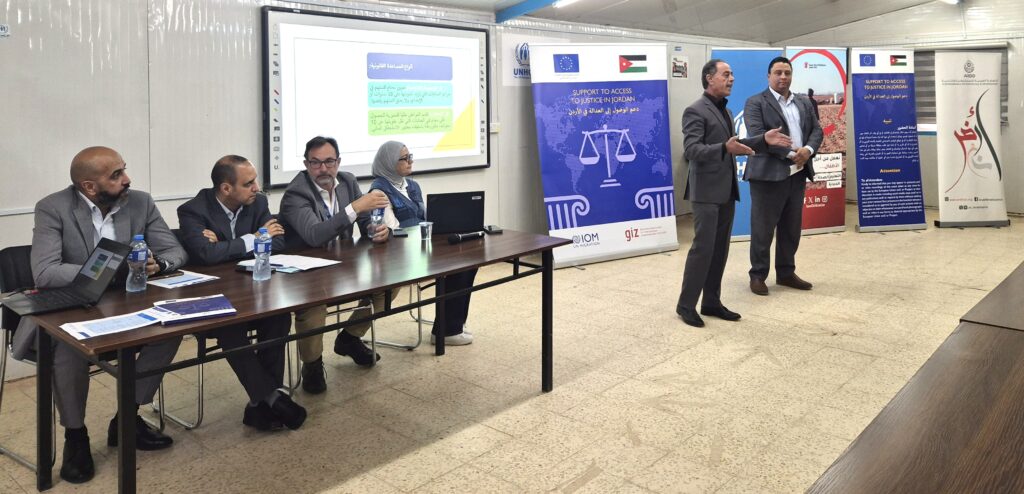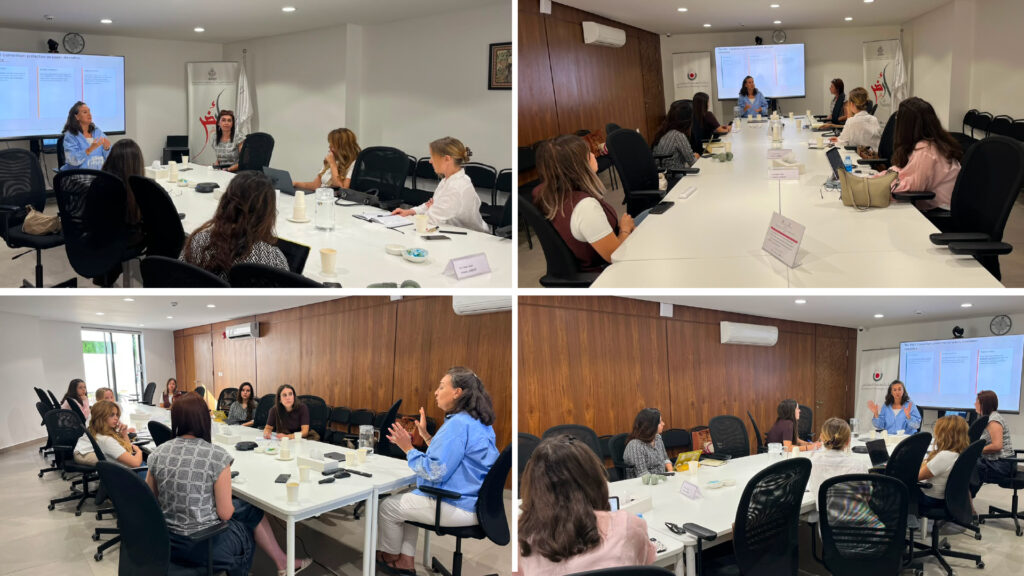
The Arab Renaissance for Democracy and Development (ARDD) in partnership with the Global Mentoring Initiative (GMI), convened a high-level strategic reflection that brought together more than 40 representatives from UN agencies, donors, INGOs, Jordanian NGOs, civil society organisations, and policy experts to examine the future of aid and localisation in Jordan amid profound shifts in the international assistance architecture.
Held under the Future Forward: Unlocking Sustainable Local Opportunities project, supported by the Regional Development and Protection Programme (RDPP), the event formed part of the ongoing efforts of ARDD and the Jordan National NGO Forum (JONAF) to generate evidence-informed dialogue, strengthen cross-sector collaboration, and advance practical policy solutions for localisation in Jordan.
A Critical Policy Moment for Jordan
The reflection took place at a time of growing uncertainty in the aid landscape. Jordan has historically been among the highest per-capita recipients of international assistance due to its role as a host country for refugees and its strategic importance in the region. Yet declining humanitarian funding, shrinking Official Development Assistance (ODA), and changing geopolitical priorities are reshaping the environment in which state institutions, international agencies, and national actors operate. By early 2026, several hundred thousand Syrian refugees were still residing in Jordan, while regional instability continued to place pressure on national systems and resources.
Participants agreed that these developments require a shift from short-term responses toward a more strategic conversation on sustainability, national ownership, and the future role of Jordanian institutions and civil society organisations. The event therefore served as a platform for policy reflection and the development of recommendations to inform the next phase of localisation in Jordan.
The Core Issue: Rethinking Localisation in a Changing Aid System
At the centre of the discussion was a key strategic question: How can Jordan adapt to a changing aid system while ensuring that local and national actors are positioned to lead future development pathways?
Participants examined several structural issues affecting localisation efforts, including the reduction of grant-based humanitarian assistance, persistent fragmentation across the aid sector, unequal power relations in funding and decision-making, limited investment in the long-term resilience of Jordanian organisations, and the transition toward development financing models such as blended finance, loans, and private sector partnerships. They also stressed the need for stronger accountability mechanisms linking programmes to community priorities.
The discussion also drew on recent evidence from localisation assessments in Jordan. A 2026 rapid survey of more than 100 Jordanian organisations, showing mixed progress: 44% of respondents reported receiving no direct international donor funding in 2024–2025, while 57% of those who did receive direct funding said it was insufficient to cover full programme and organisational costs. In addition, 54% reported receiving some flexible management cost support (ICR), while 40% reported receiving none.
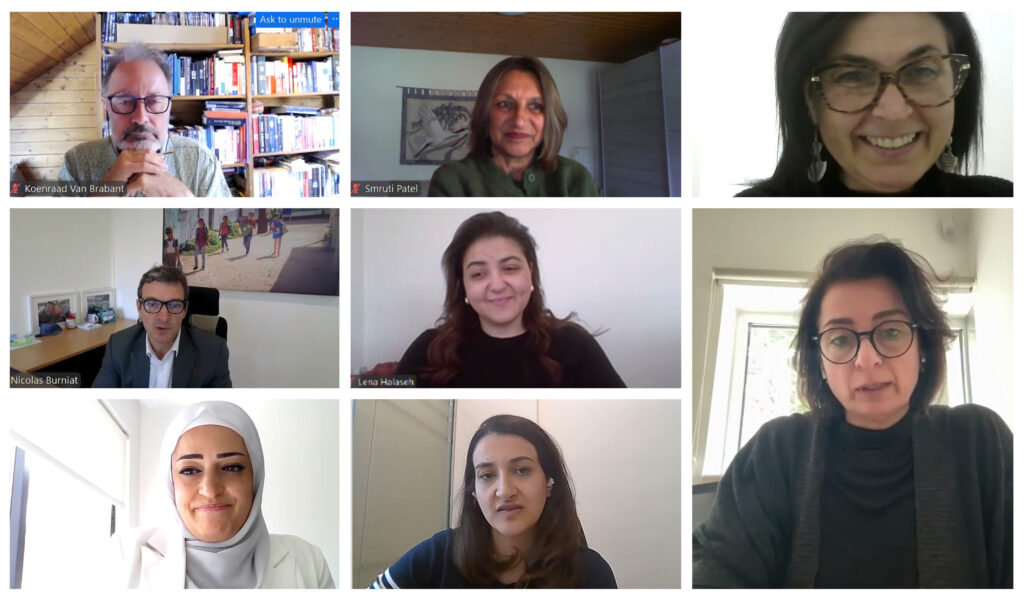
Opening the event, Lena Halaseh, Project Manager at ARDD, stressed the importance of grounding global debates in local realities and ensuring that localisation remains linked to leadership, inclusion, and institutional ownership in Jordan. She noted that ARDD and JONAF have consistently worked to advance a more inclusive aid system that recognises the expertise and added value of local and national actors.
“We have consistently called for a more inclusive aid system that recognises the leadership, expertise, and added value of local and national actors.”
In the keynote address, Nicolas Burniat, Country Representative of UN Women in Jordan, argued that localisation must move beyond a narrow focus on resource transfers and instead be anchored in sustainability and long-term systems reform. He emphasised that continued dependence on external funding flows would not provide a viable foundation for the future.
“As long as we keep on focusing the localisation discussion around transfer of international resources to national actors, we are putting ourselves in a context that’s not sustainable.”
Koenraad Van Brabant, Co-Director of GMI, highlighted that localisation cannot advance without addressing structural inefficiencies in the aid system and fostering genuine collaboration among stakeholders. He stressed the need for cumulative, collective impact rather than fragmented interventions. Adding “We have to collaborate for a cumulative, collective impact.”
Smruti Patel, Founder and Co-Director of GMI added that, “This conversation is really to prepare ourselves for the future. Thinking of what has happened and what do we need to do, individually and collectively, to move forward.”
In closing, Dr. Mariam Abu Samra, Head of the Renaissance Strategic Center at ARDD, underscored the importance of creating space for candid dialogue on dependency and power imbalances, while emphasising that the next stage must focus on implementation and measurable progress. Stating that “The priority now is to move from dialogue to implementation.”
Policy Recommendations
The reflection concluded that the next phase of localisation in Jordan should focus on a smaller number of strategic priorities. Participants called for the development of a multi-stakeholder roadmap aligned with Jordan’s national development vision, supported by stronger coordination mechanisms and focused working groups capable of translating dialogue into policy and operational reform.
They also emphasised the need to reform funding modalities so that they become more equitable, accessible, and supportive of direct financing for national actors. This should be accompanied by partnership models based on shared leadership, trust, and mutual accountability, alongside stronger community participation and citizen-centred accountability systems.
Finally, participants stressed that meaningful localisation will require sustained investment in the institutional sustainability and financial resilience of Jordanian civil society organisations, as well as support for national actors to adapt to emerging development finance models and future scenarios of reduced aid flows.
Looking Ahead
The strategic reflection concluded that the central challenge for Jordan is no longer diagnosing the gaps in localisation, but building coalitions and mechanisms capable of implementing reform. Jordan already possesses valuable experience, established platforms, and capable national institutions. The next phase will depend on whether these assets can be mobilised into a coherent and future-oriented localisation agenda.