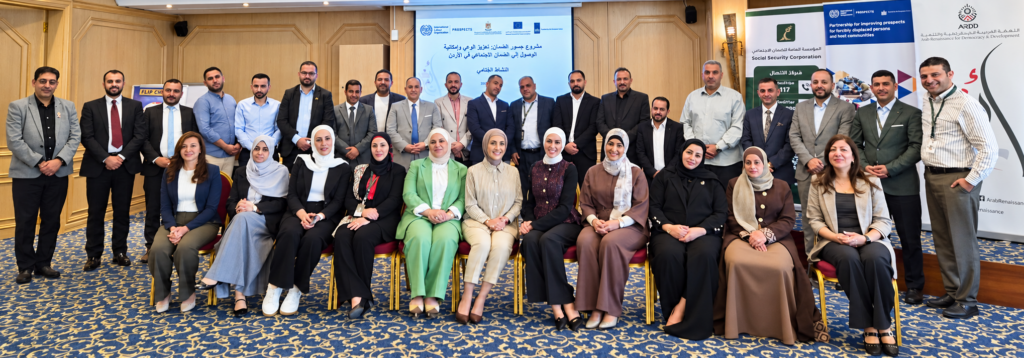
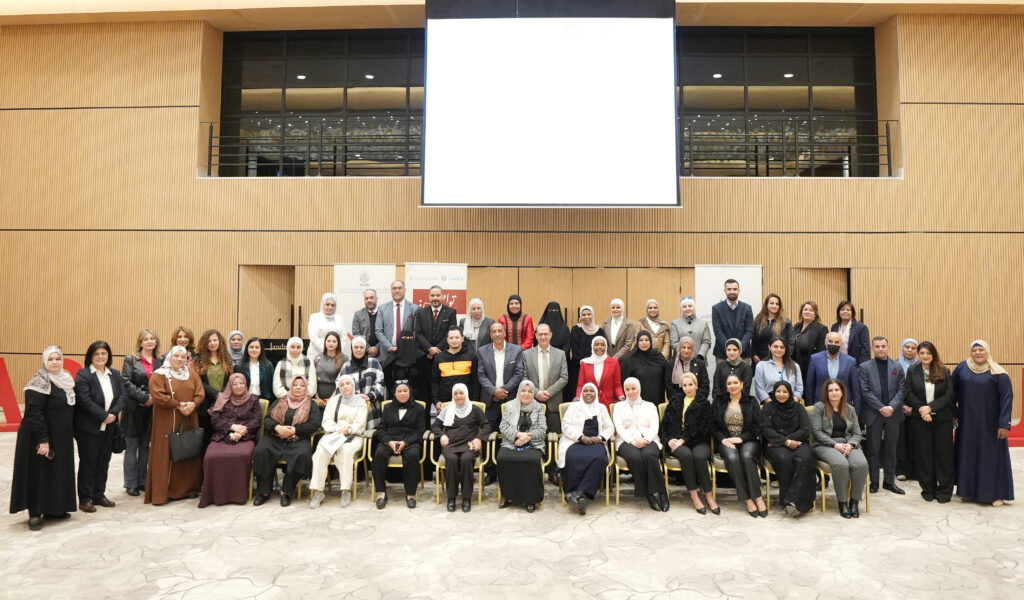
The Arab Renaissance for Democracy and Development (ARDD), in partnership with UN Women, convened a national dialogue on April 7, 2026, at the Landmark Amman Hotel, marking 25 years of the Women, Peace and Security (WPS) agenda and providing a platform to reflect on local approaches to crisis response and social cohesion in Jordan.
The dialogue brought together representatives of women- and youth-led civil society organizations from southern and selected central governorates, alongside government institutions, UN agencies, international organizations, and research actors. Discussions focused on connecting local experiences with national frameworks, while strengthening coordination and preparedness in inclusive and community-responsive ways.
Opening remarks were delivered by Mr. Nicolas Burniat, UN Women Country Representative, and Dr. Hanan Alkhrissat, Head of Tafila Women’s Charitable Association and representative of the Tawasol Network, who reflected on the continued relevance of the WPS agenda and the importance of supporting locally grounded initiatives.
Burniat stated, “Women, youth, persons with disabilities, and local communities are indispensable to effective crisis management. Their close connection to communities, including in remote areas, and their deep understanding of local needs, resources, and priorities make their inclusion a matter of necessity, not representation. Their engagement is critical to support the work of official institutions and contribute to an integrated, inclusive crisis management system that ensures no one is left behind.”
Dr. Hanan Alkhrissat described the event as both a launch and a call to action, reaffirming that women’s participation is vital for advancing peace, particularly in crisis contexts, in line with Jordan’s commitments under UNSCR 1325. She stressed that success should be measured by the ability to reach the most vulnerable and marginalized communities, as this is fundamental to justice. She also highlighted the Tawasol Network as a platform for sharing knowledge, experience, and capacity, while promoting partnerships that generate sustainable, long-term impact.
The Tawasol Network was introduced by Eng. Zainab Alkhalil, Programs Manager at ARDD, outlined its role as a collaborative platform supporting women’s engagement in crisis prevention, preparedness, and response within Jordan’s WPS framework. Building on earlier work in southern Jordan, ARDD and UN Women Jordan expanded the initiative in 2025 to align with the implementation of the Second Jordanian National Action Plan for UNSCR 1325 (JONAP II). In its current phase, Tawasol seeks to strengthen coordination between local organizations and national processes while promoting more inclusive and locally informed crisis management approaches.
The first panel discussion, moderated by H.E. Ms. Asia Yaghi, Member of the Jordanian Senate and representative of Al Nahda Women Network, focused on experiences from southern Jordan. Contributions were shared by Dr. Azzam AlShamayla of Al-Shehabiyya Charitable Association in Karak, Dr. Aida Khattab of the Women’s Committees for Ma’an Governorate and the Jordanian National Forum for Women, Ms. Abla Alhajaya of Al-Hessa Charitable Association in Tafila, Ms. Qutna Alhwetat of Women of the Villages in Al-Disi Association, and Ms. Eman AlHourani, Women, Peace and Security Programme Specialist at UN Women. Together, they reflected on how women-led organizations have contributed to crisis response and social cohesion in their communities.
AlHourani emphasized: “The launch of this national dialogue marks a strategic step toward institutionalizing inclusive crisis management in Jordan, grounded in strong partnerships between government and civil society. Through our investment in strengthening local networks such as Tawasol, we are enabling women and community-based organizations to play a central role in building resilient and prepared communities.”
Dr. Aida Khattab noted that crises extend beyond Southern Jordan, with Amman also facing unemployment, water scarcity, climate change, and growing pressures on communities. She praised the dedication of local leaders, stressing the need for greater recognition and resources to strengthen their impact. She also commended national organizations such as ARDD for supporting local leadership and called for a shift toward proactive crisis management.
The second panel, moderated by H.E. Ms. Ruba Matarneh of the Jordanian National Forum for Women and representative of the Jordan National NGO Forum (JONAF), explored partnerships between civil society, government, and international actors. Participants included Ms. Buthaina AlAjlouny, Director of the Women’s Empowerment Directorate at the Ministry of Social Development; Ms. Huda Aeish from the Jordanian National Commission for Women; Mr. Abdulaziz Khalid Alzibn from the Ministry of Interior; Ms. Ebaa Hamed from the Higher Council for the Rights of Persons with Disabilities; and Ms. Majd Suleiman from the International Rescue Committee. Discussions focused on enhancing coordination, strengthening institutional linkages, and supporting sustained engagement between stakeholders.
AlAjlouny highlighted the Ministry’s support for implementing UNSCR 1325 through stronger legal protections, shelters, and leadership training for women in crisis management. She emphasized the vital role of civil society and charitable organizations as community partners, noting joint initiatives and grants that advance the WPS agenda. Looking ahead, she underscored the importance of partnerships and social networks in delivering sustainable impact through a new social cohesion project across Jordan.
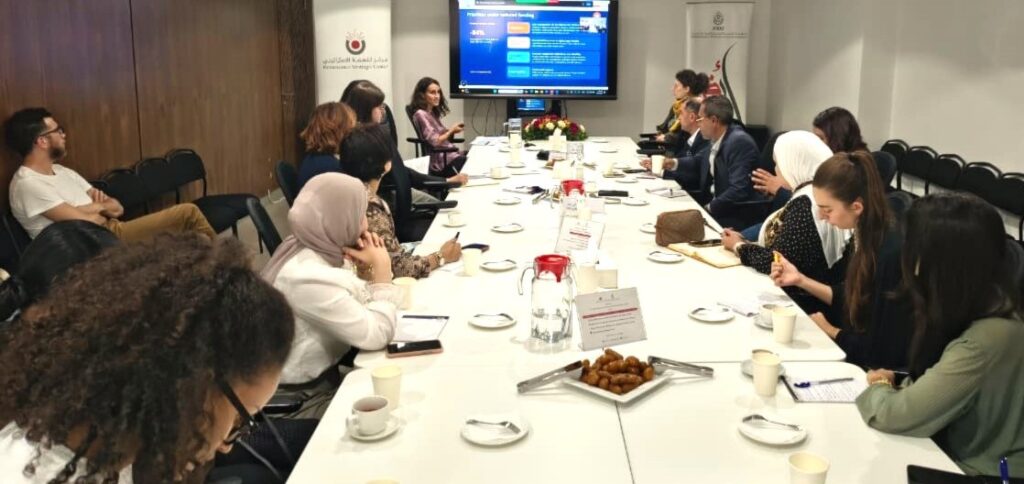
The dialogue also included a knowledge-sharing session led by Ms. Leen Masoud, Research Officer at ARDD’s Renaissance Strategic Center, who presented findings from a recent policy brief on social cohesion in southern Jordan. The session highlighted how community-based approaches contribute to resilience while identifying areas where further support and coordination are needed.
Ms. Masoud noted: “Women-led CBOs are essential to strengthening social cohesion, but closing funding and capacity gaps, especially in South Jordan, is critical. Investing in these organizations and aligning policy with practice is key to building resilience and inclusive crisis response systems.”
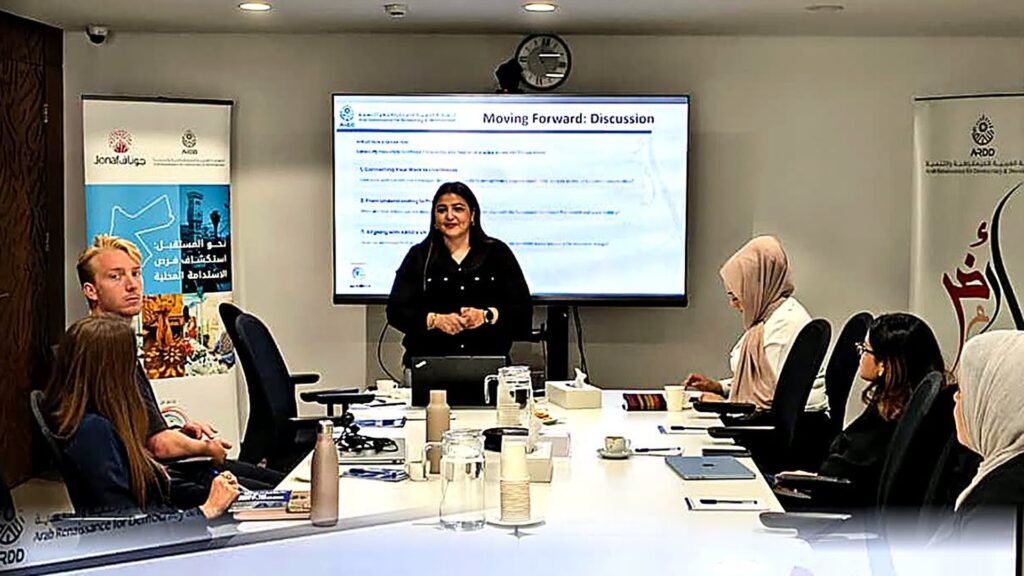
The event concluded with a discussion on next steps for the Tawasol Network, including its structure, sustainability, and role within broader WPS efforts in Jordan. Participants emphasized the importance of continued dialogue, inclusive participation, and sustained engagement across all levels.
This dialogue is part of the “Tawasol – Strengthening Crisis Management” initiative, implemented by ARDD under the Women’s Access to Justice Program, in partnership with UN Women, and supported through the JONAP Pooled Fund.