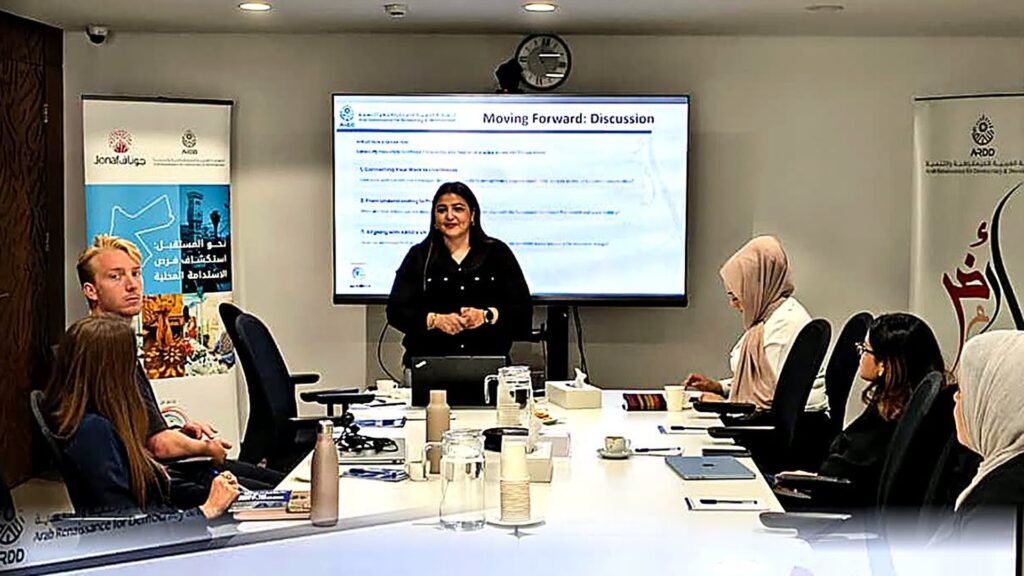
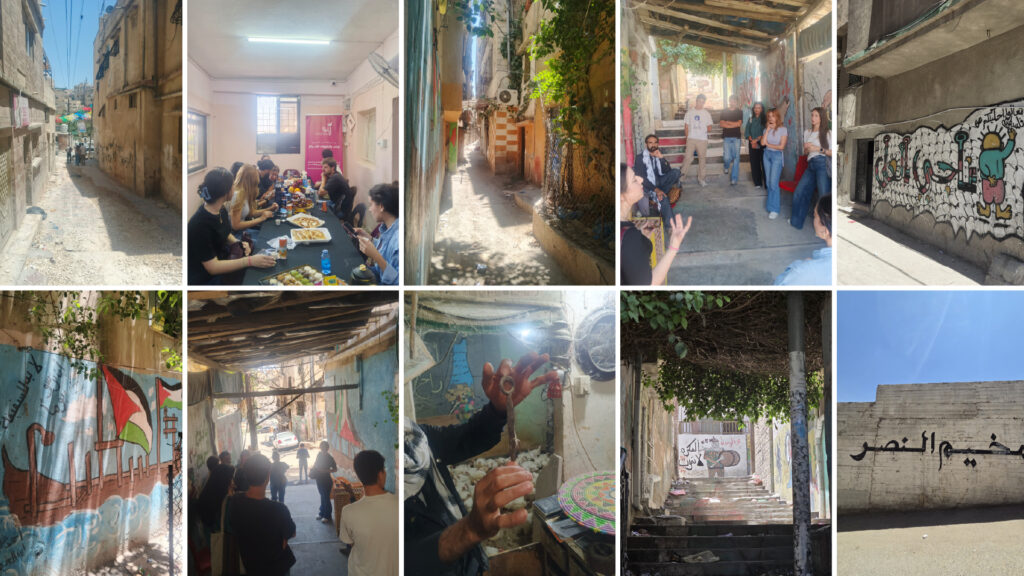
As part of the summer course “International Politics in the SWANA Region: Colonial Legacy, Displacement, and Humanitarian Governance,” organized by the Renaissance Strategic Center (RSC) at the Arab Renaissance for Democracy and Development (ARDD) in partnership with Birzeit University, students and RSC interns participated in a field visit to Al-Nasser Palestinian refugee camp, supervised by Dr. Mariam Abu Samra, Head of RSC.
The visit began with a walk through the camp, giving participants an opportunity to explore its urban landscape, local businesses, and different forms of art, while meeting residents and hearing about their experiences. Established in 1967 by Palestinian refugees, Al-Nasser Camp remains a living reflection of displacement and the challenges of development in the context of the right of return.
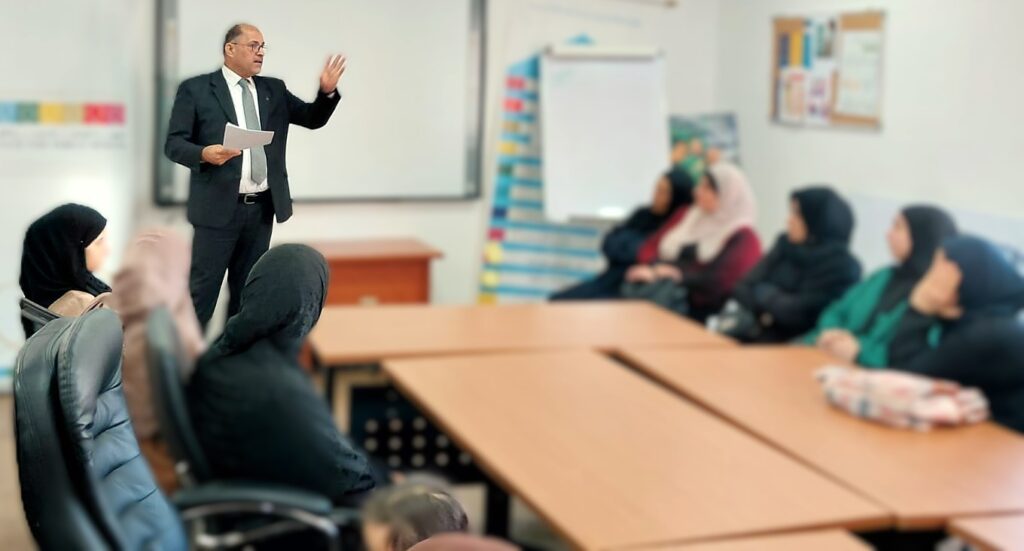
The second part of the visit took participants to the Aldiaa Charity Association, a women-led organization supporting the local community by collecting surplus food from hotels and redistributing it to families in need. Discussions focused on the experiences of the women leading the association, the challenges posed by limited funding, and their aspirations to expand its work and reach more families.
The visit allowed participants to connect the course discussions on refuge, displacement, and humanitarian governance with the everyday realities of Palestinian refugees in Jordan. It also offered a closer look at the role of locally rooted initiatives in strengthening solidarity, resilience, and community support.
One participant reflected:
“Engaging with these women shows that meaningful initiatives often come from within communities, which have a deep understanding of their own needs. Supporting and empowering these locally rooted efforts is therefore essential.”
Another participant commented:
“I found the visit extremely informative and important. It introduced me to sides and stories of Amman that I would not otherwise have heard about or seen.”
The field visit reflects ARDD’s broader approach to connecting academic learning with realities on the ground, giving students a deeper understanding of refugee experiences and the role of local civil society in responding to community needs and strengthening protection and solidarity.