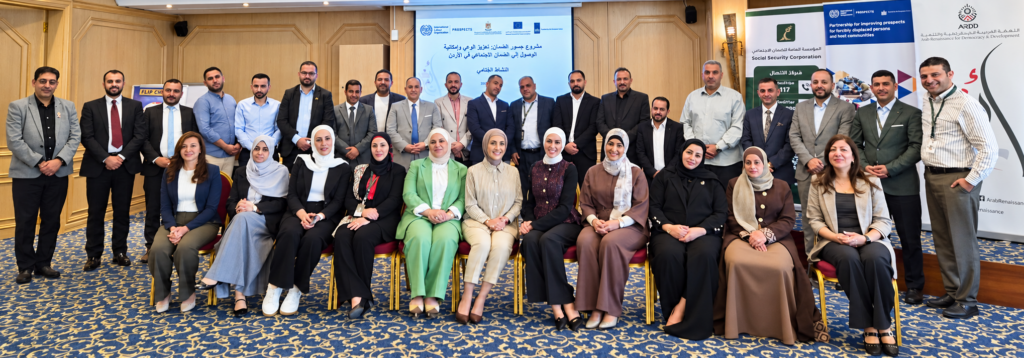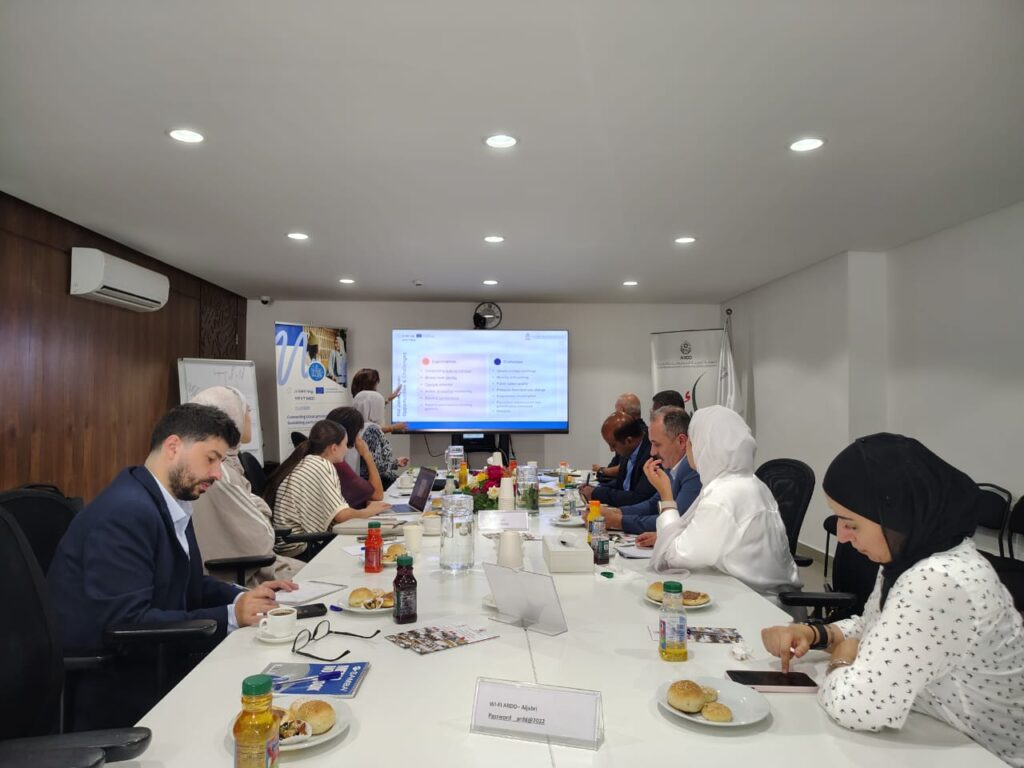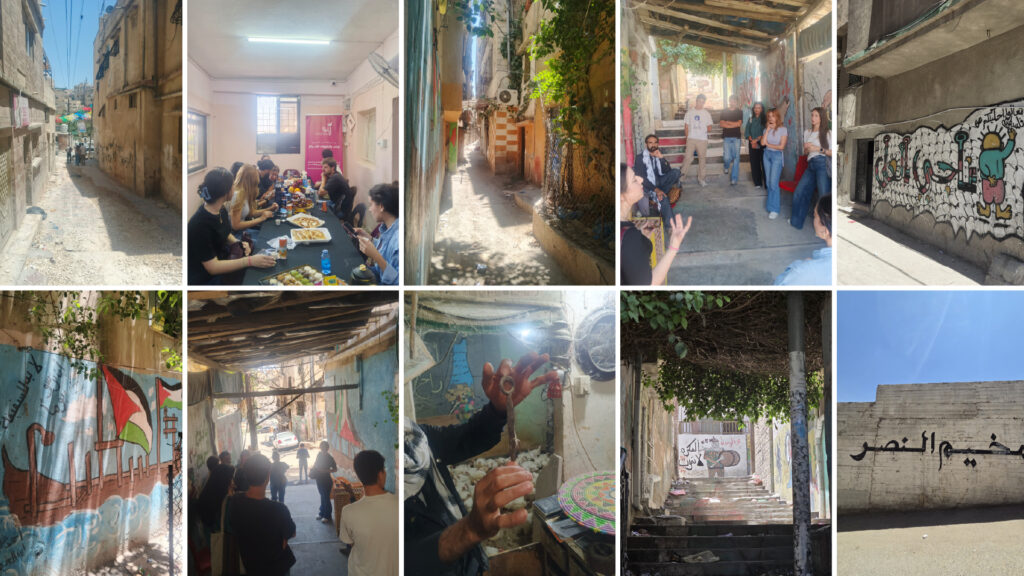
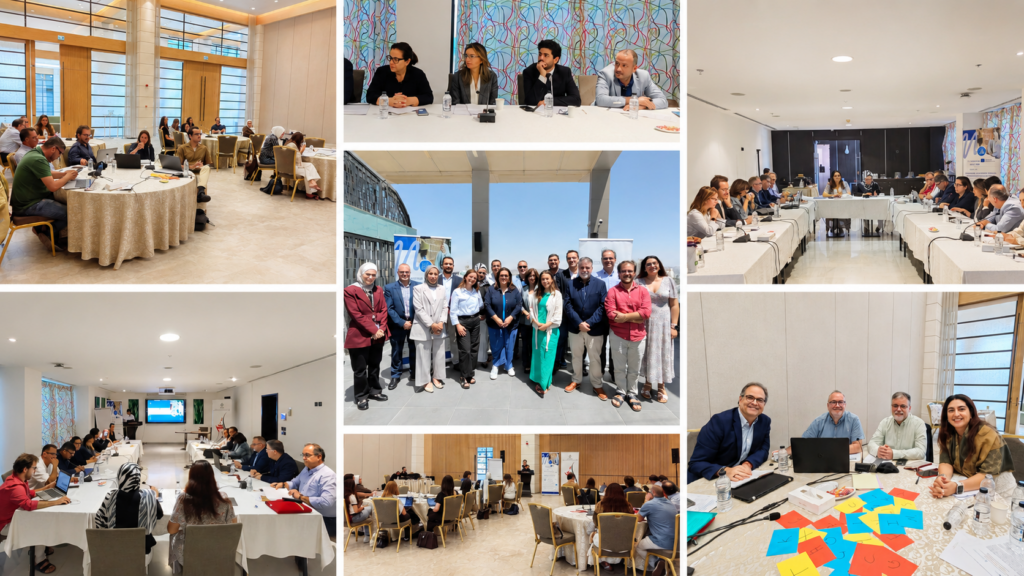
The Arab Renaissance for Democracy and Development (ARDD) concluded the International Training Camp: “From Local Proximity Networks to Collective Action: Strengthening Local and Cross-Border Participatory Governance,” held from 19–23 July 2026 in Amman within the framework of the CLOSER – Connecting Local proximity networks, Sustaining participatory govERnance project under the Interreg NEXT MED Program. Hosted by ARDD, the regional gathering brought together -25 participants- including project partners, local authorities, civil society organizations, and community representatives from Jordan, Palestine, Lebanon, Italy, Greece, and Spain, to exchange experiences and strengthen regional cooperation on participatory governance.
The five-day camp provided a platform for comparative learning and policy dialogue on participatory governance, localization, and community-led development. Through interactive workshops facilitated by CLOSER partners, technical exchanges, and collaborative planning sessions, participants examined how locally grounded governance approaches can contribute to more inclusive, responsive, and resilient public institutions while strengthening partnerships between local authorities, civil society, and communities.
Hosted under ARDD’s Good Governance Program and in collaboration with Greater Amman Municipality (ARDD’s Associated Partner under CLOSER), the training camp reflected the organization’s longstanding commitment to advancing participatory governance through evidence-based programming, regional cooperation, and policy dialogue. It also drew on the analytical work of the Renaissance Strategic Center (RSC), whose research on governance, civic participation, and localization has sought to bridge policy and practice while contributing to regional conversations on inclusive governance and institutional resilience.
Eng. Malak Suleiman, CLOSER National Coordinator at ARDD, said:
Embodying the collaborative spirit at the heart of the CLOSER project, designing and hosting this training camp served to translate cross-border cooperation into a practical blueprint for Mediterranean governance. By bringing together practitioners from six nations, we moved beyond passive knowledge-sharing to co-designing actionable tools that bridge local proximity networks with institutional strategy. This camp demonstrated that aligning local authorities, civil society, and communities seamlessly connects local realities to a unified, resilient Mediterranean framework for collective action.”
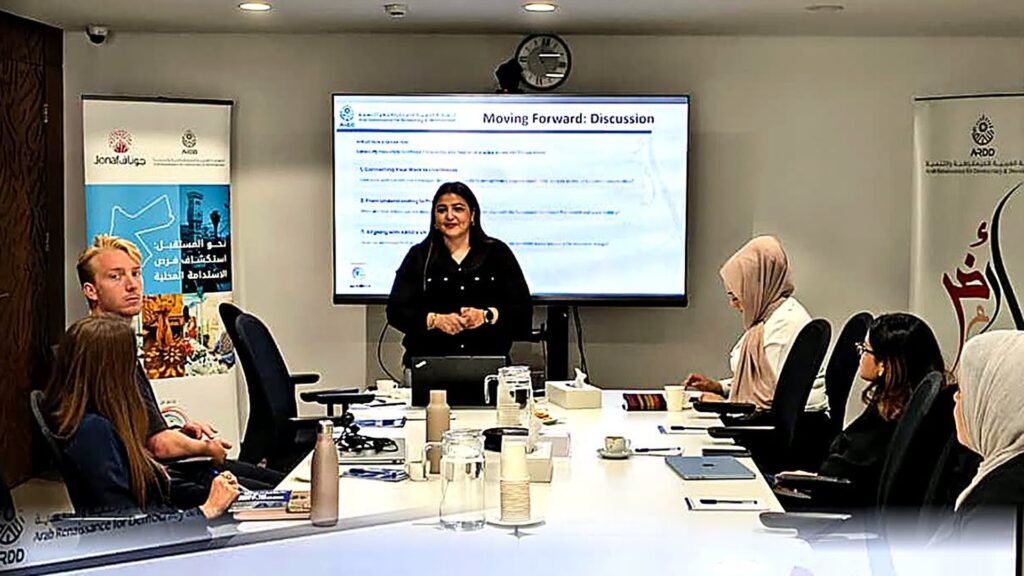
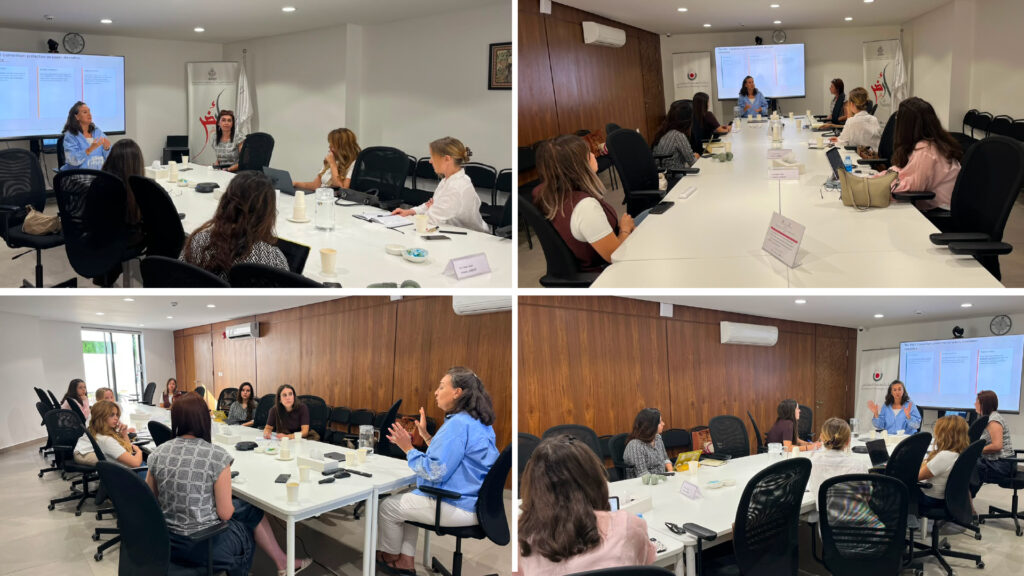
The camp opened with discussions of the foundations of participatory local governance, then examined inclusive governance as a prerequisite for sustainable local development. Dr. Salma Nims, an expert on gender and public policy, explored how governance systems become more effective when they systematically incorporate gender-responsive approaches and create meaningful opportunities for women, young people, and marginalized communities to participate in decision-making. Her contribution emphasized that inclusion is not an additional dimension of governance reform but an essential condition for effective and accountable institutions.
“Transforming participatory governance from a series of ad-hoc exercises into a core institutional standard is vital for long-term governance resilience. When local authorities systematically embed inclusive community evidence into policy-making and budget planning, they don’t just consult citizens; they elevate public trust, optimize resource allocation, and build inherently accountable institutions.” Al Nims noted.
Building on these discussions, Dr. Mariam Abu Samra, Head of the Renaissance Strategic Center (RSC), examined governance through the lens of localization and multi-level governance frameworks. Drawing on comparative experiences from the Arab region, she highlighted the importance of strengthening the relationship between institutions and communities while enabling locally driven priorities and knowledge to inform governance processes. Her session underscored that localization extends beyond administrative decentralization to encompass participatory approaches that reinforce accountability, social cohesion, and collective ownership of development processes.
Dr. Mariam Abu Samra said:
“Localizing governance is not merely about transferring administrative tasks; it is about reorganizing power, authority, and resources so local actors actively shape the decisions that impact their communities. The challenge we face today is not choosing between local, national, or regional governance, but building interactive systems in which each level strengthens the others”
Partners also engaged in technical sessions on stakeholder mapping, territorial assessments, governance challenges, participatory methodologies, and strategic planning, sharing experiences from the six participating countries and reflecting on the opportunities and constraints facing Local Proximity Networks (LPNs) in diverse political, institutional, and social contexts. These exchanges highlighted the value of comparative learning and peer dialogue in strengthening locally adapted governance approaches.
The camp further benefited from the contribution of Sir Charles Petrie, international governance expert and former United Nations Assistant Secretary-General, who joined participants virtually to discuss the transition from civic activism to participatory local governance. Reflecting on international experiences in fragile and transitional settings, he emphasized the importance of building trust between institutions and citizens and of embedding participation within governance systems capable of responding to evolving local needs. “Supporting participatory systems of local governance is no longer an exercise in democratic idealism; it is the most realistic pathway toward rebuilding resilient and legitimate states. International peacebuilding must move beyond the obsolete premise of top-down centralization and recognize that durable peace begins where trust is earned and services are delivered: at the local level.” He added.
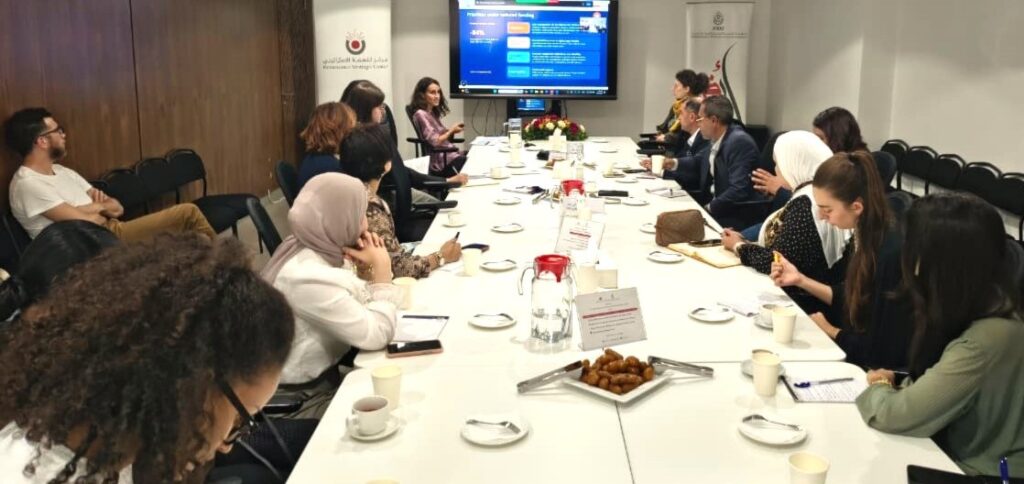
A central milestone of the week was the Regional Roundtable on Participatory Governance Best Practices, jointly organized by ARDD and the University of Alicante. The roundtable brought together practitioners, ministries, , municipalities, private sector representatives and civil society representatives to reflect on emerging governance practices from across the Mediterranean. Discussions highlighted the importance of adapting governance models to local contexts while fostering regional learning, knowledge exchange, and collaboration across institutional and geographic boundaries.
The session also highlighted a number of best practices from Jordan. These included the Diwanieh Public Debate Initiative, presented by Dr. Sami Hourani, as a compelling example of participatory governance and civic dialogue; Himmetna Health, presented by Dr. Fadia Samara, showcasing a participatory implementation and service-delivery partnership model; and the Queen Noor Park – Al Hashmi Al Janoubi initiative, presented by Eng. Aya Hammad from UN-Habitat, as an example of community-led public space development.
As the Representative of the University of Alicante, Fulgencio Cerdá, Mayor of Villena commented: “True participatory governance begins in our municipalities, where public policy meets the daily realities of citizens. Collaborating with institutions like ARDD and the University of Alicante allows us in Villena not only to share our local experiences, but to learn from municipal leaders and practitioners across the Mediterranean, ensuring our local governance models are stronger, more inclusive, and resilient.”
Where the representative of GAM, Eng. Safwat Al-Momani noted, “Bringing together multi-sector expertise across six Mediterranean countries, the international training camp served as a vital catalyst for institutionalizing participatory governance in urban planning. By moving beyond traditional engagement models to adaptive collaboration tools, this initiative equipped us to co-design more inclusive, transparent, and resilient city planning processes alongside a strong regional network of peers.”
The programme also marked the official launch of the CLOSER Cross-Border Network, establishing a regional platform to facilitate continued cooperation, peer learning, policy dialogue, and knowledge exchange among project partners and stakeholders beyond the project’s lifetime. The network is expected to strengthen collaboration on participatory governance and contribute to the development of a sustained Mediterranean community of practice.
As the Representative of the CLOSER Consortium Lead – Centro per lo Sviluppo Creativo Danilo Dolci – ETS, Italy, Antonella Alessi commented: “The launch of the CLOSER Cross-Border Network marks a strategic transition from local implementation to a durable Mediterranean governance architecture. By institutionalizing cross-border policy dialogue and peer exchange beyond the project lifecycle, we are creating a permanent mechanism capable of scaling local proximity insights into systemic, region-wide solutions.”
The training camp concluded with a field visit to Petra – one of the New 7 Wonders of the World- and complemented the week’s discussions by connecting conceptual frameworks with practical experiences from Jordan and demonstrating how local partnerships can contribute to sustainable urban development and community resilience.
To conclude the event, participants reaffirmed the importance of sustained regional dialogue that bridges research, policy, and practice, while strengthening cooperation among local authorities, civil society organizations, academic institutions, and communities. The International Training Camp demonstrated the value of comparative exchange in advancing participatory governance and laid the groundwork for continued collaboration through the CLOSER Cross-Border Network.