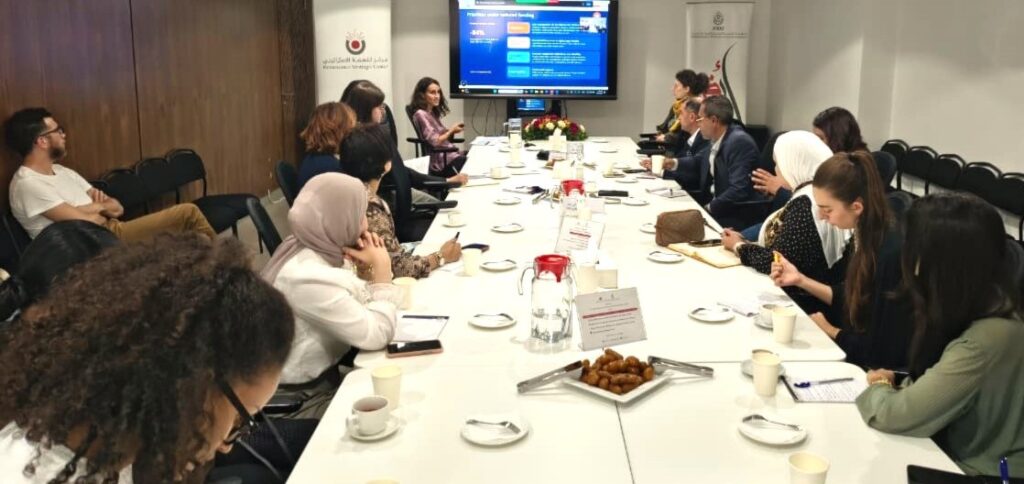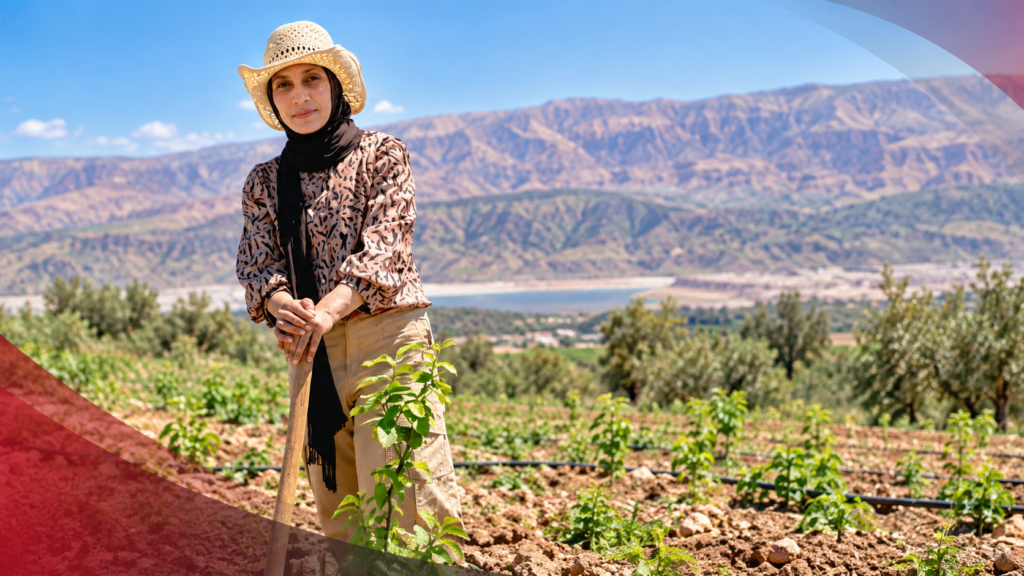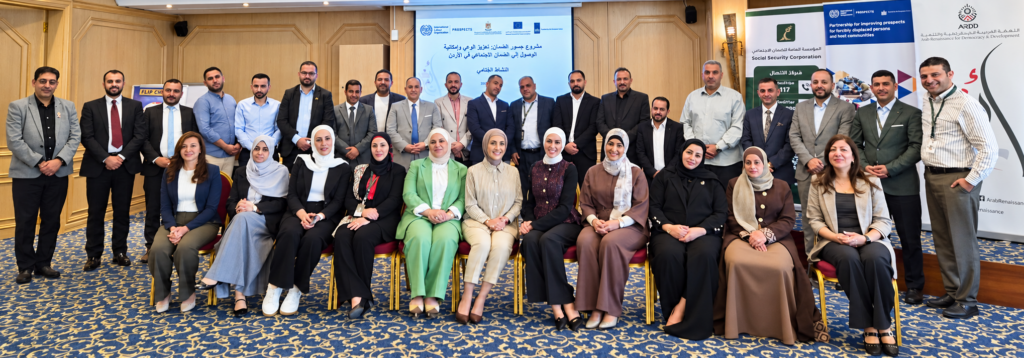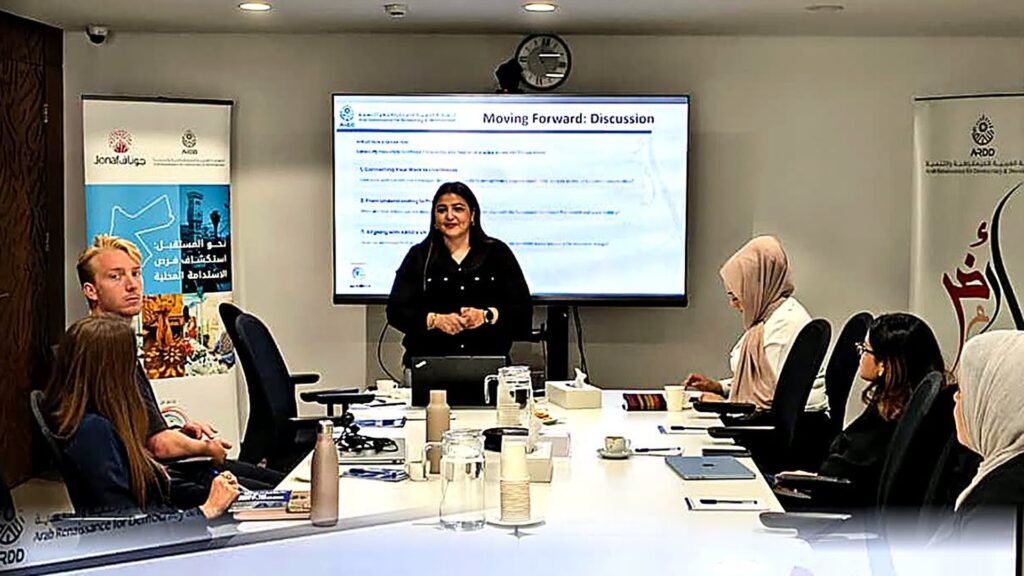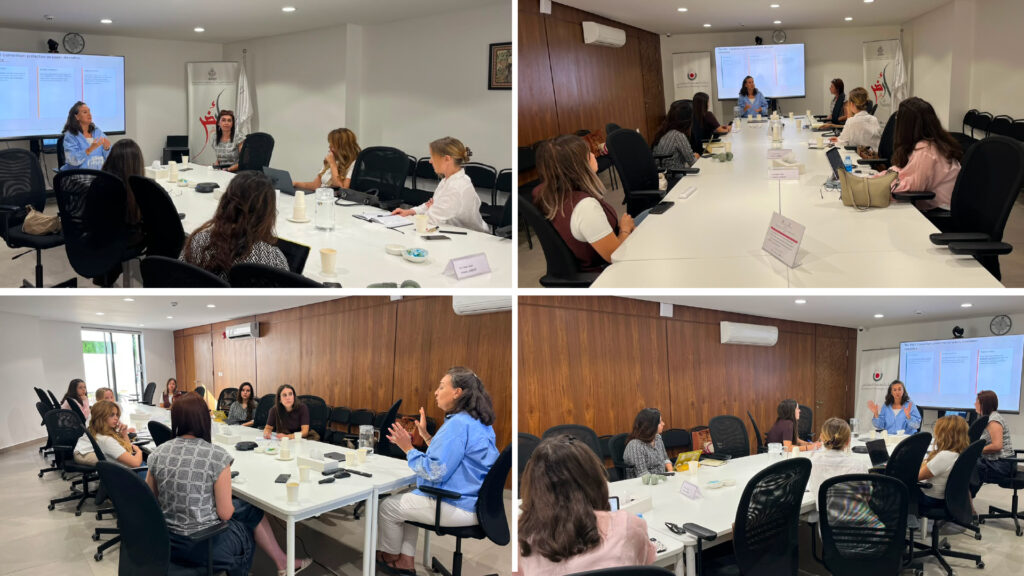
Lebanon continues to face significant pressures arising from displacement and its impact on those living within the country. In light of these challenges, the Renaissance Strategic Center (RSC) at the Arab Renaissance for Democracy and Development (ARDD) hosted a seminar titled “Participatory Journalism: Learning from The Lebanon Displacement Diaries” to explore an alternative type of journalism. In contrast to mainstream media and statistical reporting, participatory journalism gives real voices and freedom of expression to underrepresented communities most affected by displacement.
The webinar was moderated by Maria Giovanna Mariani, RSC Research Officer, and was joined by Annie Slemrod and Zainab Chamoun, journalists for The New Humanitarian who collaborated on and helped develop the storytelling project, The Lebanon Displacement Diaries.Annie Slemrod is an award-winning journalist, editor, and innovative storyteller who has worked in the region for over a decade. Zainab Chamoun is a South Lebanese freelance journalist and researcher who has herself experienced, and continues to experience, displacement.
Participatory journalism is a model of news production where the people being reported on become active contributors rather than passive subjects. It breaks down the traditional boundary between journalist and source, turning news-making into a genuine dialogue. This webinar is intended to form part of a wider series of events bringing together journalists and humanitarian communities to focus on this approach to journalism.
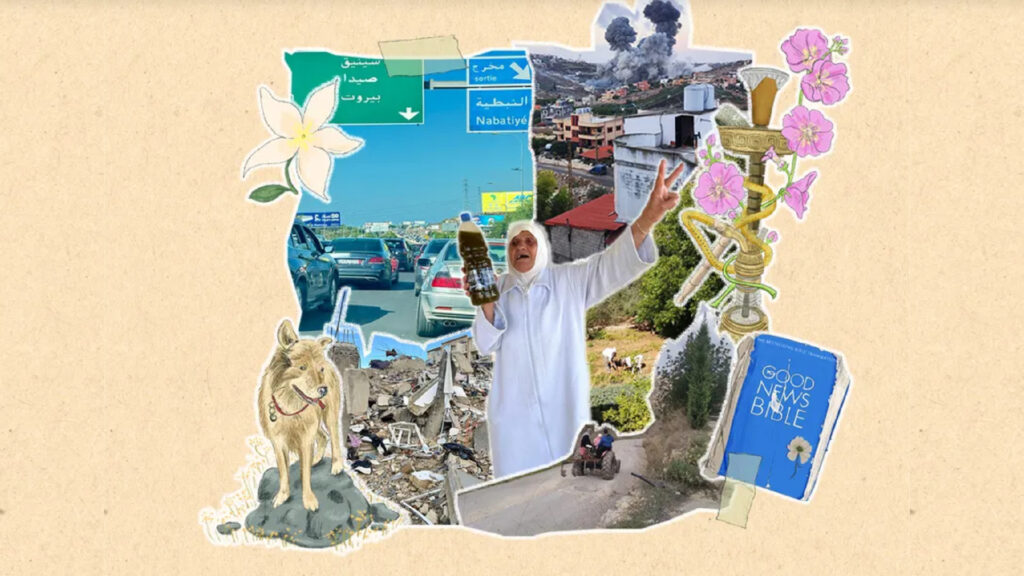
If you were displaced, what would you take from your home? The two journalists opened the session with an interactive task. They asked the audience: if you were displaced, what would you take from your home? This was the question with which the project itself began. It is not the kind of question mainstream media would typically focus on, but it reflects a real and deeply personal struggle faced by people forced to leave their homes. The authors knew that this question would add personal depth to the accounts of those who participated in the Lebanon Displacement Diaries, while also allowing readers to relate more closely to those affected by displacement.
Media coverage, they explained, often focuses on numbers and data, while the real experiences of people, with their fears, hopes, and daily lives, are lost. The project intended to do the opposite, highlighting the depths of the conflict and its human toll. Displacement is not a singular event with a clear beginning and end. It is an ongoing, layered experience. Slemrod and Chamoun made it explicit with the quote “the end of war is not the end of the story”.
The Diaries: Step by Step
The journalists Slemrod and Chamoun explained the methodology they followed during the process that led from the mere idea of the project to its actual implementation. They presented it in six steps.
- The first step concerned audience and impact mapping, which they underlined had to take place long before the concrete project began. This meant carefully identifying the selected audience and what impact the project would have on that audience. For this project, the authors wanted to target the national Lebanese audience, but also, at a broader level, the international readers. The latter, described as the ‘my mom audience’, refers to those who are globally curious, but who do not necessarily know the details of the Lebanon crisis and might only understand about it through their regular news outlet.
- The authors then considered the format. Slemrod and Chamoun wanted the diaries to represent a natural and genuine way of communicating individual stories. They allowed each participant to speak freely and tell their own stories. This is why they used the diary format, because it allowed for that sense of genuineness. The people chose to provide photos and videos alongside their diary entry, bringing life to each piece. Within each diary entry, they also retained the different shades of Arabic dialects, something rare in the media, to communicate each person’s identity.
- Then, Slemrod and Chamoun decided on the methodology of selecting participants and reaching beyond their own network. It was important for them to engage with a range of people from different backgrounds with different perspectives. It was not necessarily easy to do so, because of the living conditions, access to the people, and marginalization. The authors acknowledged that there were so many stories to tell, but that they could only publish ten. So, they decided to make those ten stories as diverse as possible.
- The journalists followed trauma-informed reporting guidelines. They met with a Lebanese trauma therapist, who instructed them on how to interact with vulnerable people in that specific context. These guidelines included preparing the interview environment with care, giving participants choice and a sense of ownership over their stories, finding meaning in sharing them, creating space to breathe, being mindful of pressure of ongoing trauma, and not to be afraid to ask for psychosocial support if needed.
- The penultimate step involved deciding who would be on the team, how aware they were of local sensitivities and context, and who held power within the process. This included understanding the individuals involved in the project, and their specific dialects. Being Chamoun a Lebanese herself and sharing her own experience with the people interviewed, that was an added value to the project.
- Finally, the authors decided how the diaries could be best distributed, including through circulation and replication. The diaries have been published online in The New Humanitarian. They were also co-published with local Lebanese media, Daraj Media. In addition, they launched a campaign to spread the diaries across social media platforms.
When Art transforms into Art: From Journalism to Theater
The diaries went beyond and inspired a theatre performance at Laban Theatre in Beirut. The performance was actually a powerful echo to the stories shared in the diaries. Moreover, during the performance, the people in the public had the chance to be engaged in the storytelling, sharing their own experience of displacement and how it has affected them. Each participant’s story was represented on the stage through improvisation. Importantly, the performance was realized by Lebanese people, for a Lebanese audience.
Lessons Learned
To ensure the project’s continuity and assist future participatory journalism initiatives, Slemrod and Chamoun shared several key lessons from this journey, aiming to guide future initiatives and inform others on practicing ethical participatory journalism. A fundamental lesson was that individuals should never be defined solely by their trauma. To support this, journalists must prioritize early collaboration and active listening, allowing individuals to tell their stories freely. Maintaining ongoing relationships with participants is equally important, which means sharing regular updates on the project’s progress, feedback, and final impact. Finally, they raised awareness about the emotional toll of this work on participants, editors, translators, and journalists alike. Chamoun emphasized that their role is not to treat or resolve trauma, but to offer a supportive space by listening and validating feelings.
Conclusions
To conclude this session, the journalists welcomed future collaboration with anyone interested in developing or supporting similar projects. Today, mainstream media too often reduces complex global crises to mere numbers, forgetting the human faces behind each fact. Participatory storytelling serves as a critical alternative: it disrupts this narrative by prioritizing individual experiences and giving a voice to those who might otherwise remain unheard. This project directly addresses that urgent need, proving that human stories must always be at the center of journalistic narratives.
To know more about the stories shared in the Lebanon Displacement Diaries, click here: https://interactive.thenewhumanitarian.org/stories/2025/05/22/lebanon-displacement-diaries/home